


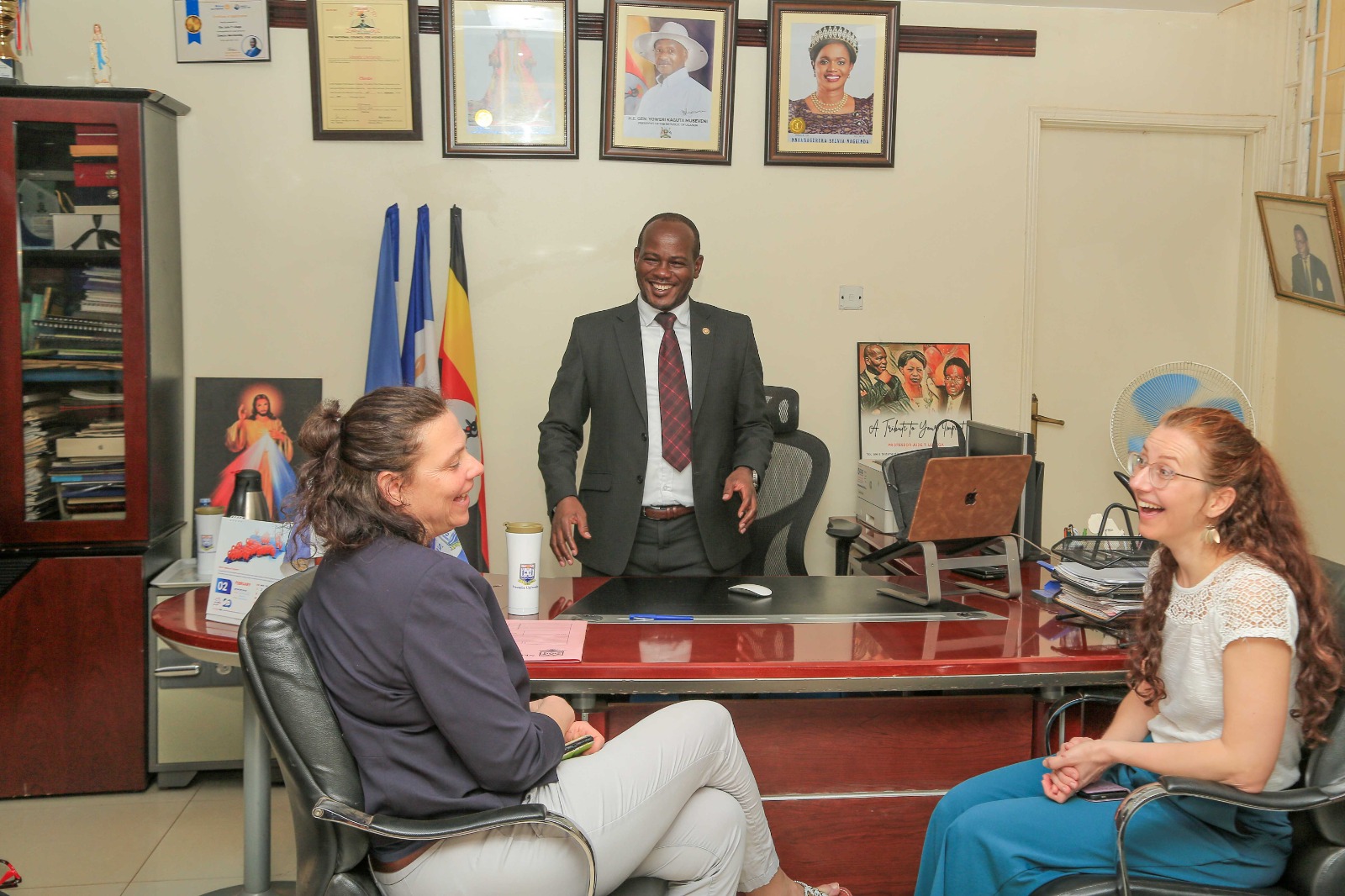
Nkumba University on Tuesday hosted a delegation of 10 students and staff from Technical University Dresden (TUD), in a visit aimed at strengthening collaboration on education for Sustainable Development Goals (SDGs) compliance.
The team from TUD’s Zentrum für Lehrerbildung, Schul- und Berufsbildungsforschung (ZLSB), a central scientific unit focusing on teacher education, school development and vocational education research, is in Uganda to follow up on joint project activities implemented since May 2025. The delegation is led by Prof. Melanie Wohlfart and Aurica Borszik.



Speaking during a meeting at the university’s main campus in Entebbe, Nkumba University Vice Chancellor, Prof. Jude Lubega, welcomed the visitors and urged them to “feel at home,” describing the partnership as an attestation to the institution’s growing international footprint. “We are honored to host colleagues from TU Dresden. Collaboration in education, particularly around the SDGs, strengthens our shared commitment to producing graduates who are globally responsive and locally relevant,” Prof. Lubega said.
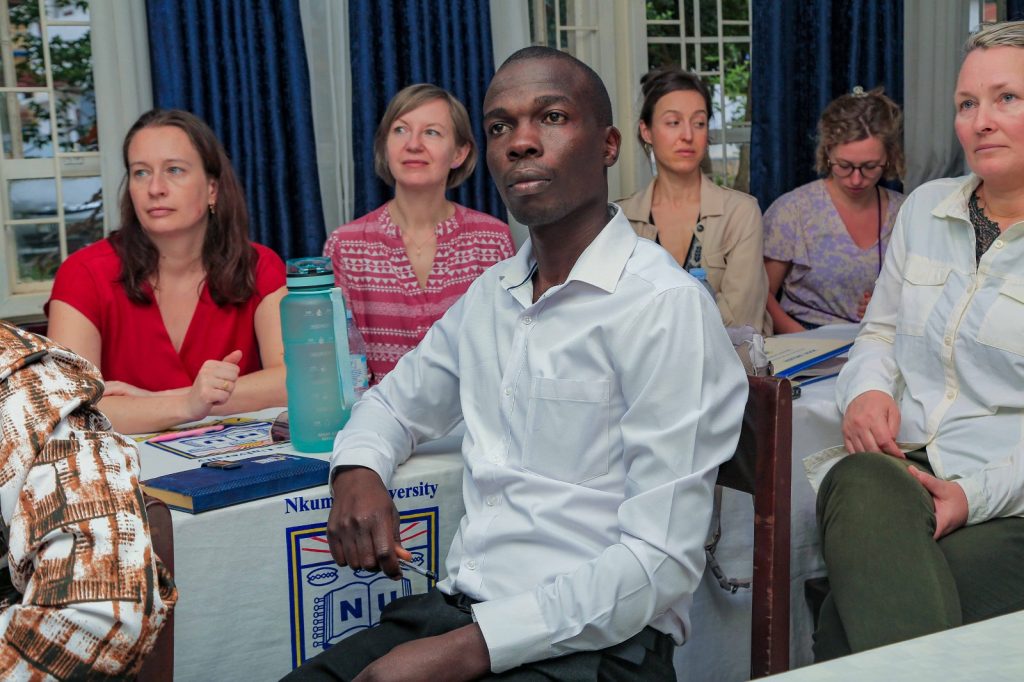
The partnership brings together Nkumba University, TU Dresden and Katosi Women Development Trust (KWDT), a Ugandan non-governmental organization that works autonomously in partnership with the Saxony local government in Germany. KWDT coordinates more than 20 Ugandan schools linked with partner institutions in Saxony.
During the visit, presentations were made highlighting feedback on project activities undertaken in both Germany and Uganda over the past nine months. Discussions also focused on future plans under the Nkumba University–TUD collaboration framework.
Dr. Esther Namugumya, who coordinates the partnership under Nkumba University’s School of Education (SEDU), described the engagement as a milestone in building academic cohesion. “This is a good step in creating academic cohesion aimed at bringing people of purpose together for the realization of the SDGs,” Dr. Namugumya said. “By aligning teacher education and community engagement with global sustainability goals, we ensure that our impact goes beyond lecture rooms.
Mr. Charles Kagwa, the university’s International Relations Coordinator, said the visit reflects Nkumba’s deliberate strategy toward internationalization of its academic programs. “This exchange is part of our broader agenda to strengthen global partnerships, enhance research collaboration, and provide cross-cultural exposure for our students and staff,” Mr. Kagwa said. “Internationalization is no longer optional; it is central to the competitiveness and relevance of modern universities.”
Founded in 1994, Nkumba University has, over the years, expanded its academic portfolio and partnerships, positioning itself as one of Uganda’s leading private institutions of higher learning. The collaboration with TU Dresden adds to a growing list of international linkages designed to enhance research, innovation and community outreach.
TU Dresden, one of Europe’s prominent public universities, has built a strong reputation in teacher education through ZLSB, which coordinates teacher training programs, provides mentorship, and conducts research to improve educational quality.
The ongoing SDG-focused project reflects a global shift in higher education toward embedding sustainability principles within curricula, research, and community practice, in line with the United Nations 2030 Agenda.
The TUD delegation’s visit will conclude on Sunday, with field engagements and meetings with partner schools coordinated by KWDT.
University officials expressed optimism that the strengthened ties would translate into expanded student exchanges, joint research initiatives, and sustained community impact in both Uganda and Germany.