


By: Wampa Emmanuel
The death penalty in Uganda is a contentious, yet legally entrenched aspect of the country’s criminal justice system, reflecting a complex interplay between colonial legacies, constitutional provisions, evolving judicial interpretations, and public sentiments on justice and deterrence. Embedded in the Constitution under Article 22(1), which permits the deprivation of life “in execution of the sentence of a court” in respect of a criminal offence, capital punishment applies to offences for example murder, aggravated robbery, treason, terrorism, rape (in certain contexts), defilement, and, more controversially following the 2023 Anti-Homosexuality Act, “aggravated homosexuality.”





Historically, Uganda inherited the death penalty from British colonial law, with hanging as the primary method of execution (alongside shooting in military contexts). Pre-colonial societies in the region, such as among the Baganda and Basoga, also imposed death for serious offences like murder, adultery, or theft, often through spearing, strangulation, or burial alive, though compensation mechanisms sometimes served as alternatives. Post-independence, executions occurred sporadically, peaking under regimes like that of Idi Amin. Under President Yoweri Museveni’s National Resistance Movement government since 1986, notable executions included batches in 1989, 1991, and a mass hanging of 28 prisoners in Luzira Prison in 1999. The last confirmed civilian executions took place around 2005, rendering Uganda a de facto abolitionist state, no executions have been carried out in over two decades despite ongoing sentencing.
A pivotal shift occurred through litigation challenging the mandatory nature of the death penalty. In the case of Susan Kigula & 417 Others v Attorney General (Constitutional Petition No. 6 of 2003), death row inmates, including Susan Kigula who had spent nearly a decade awaiting execution for murder argued that mandatory death sentences violated the right to a fair trial, the principle of separation of powers, and protections against cruel, inhuman, or degrading treatment under Articles 24 and 28 of the Constitution. The Constitutional Court in 2005 ruled the mandatory death penalty unconstitutional, as it denied judges discretion to consider mitigating factors and prevented individualized sentencing. This decision was upheld by the Supreme Court in 2009 (Attorney General v Susan Kigula), which affirmed that the death penalty itself remains constitutional but is no longer mandatory. The ruling benefited hundreds of inmates, leading to re-sentencing hearings where many received fixed-term imprisonment or life sentences instead. The Court further held that prolonged stays on death row beyond three years after final appeal confirmation without presidential action on mercy constitute cruel treatment, potentially leading to automatic commutation to life imprisonment without remission.
This judicial evolution has significantly shaped sentencing practices. Judges now exercise discretion, reserving death for the “rarest of rare” cases involving exceptional culpability, brutality, or societal impact, while considering factors like remorse, age, mental state, and rehabilitation potential. Sentencing guidelines emphasize proportionality, and appeals often result in mitigation. Consequently, the number of prisoners on death row has fluctuated but trended downward from over 400-500 in the early 2010s to around 145 as of recent estimates, with some reports citing even lower figures like 103-124 in certain years. No executions have followed, partly due to presidential reluctance to sign death warrants and international human rights pressure from bodies like the UN and Amnesty International. Efforts toward full abolition, including private member’s bills in Parliament ( for example around 2013-2016 led by MPs like Alice Alaso and Fox Odoi), have stalled amid public support for retention in serious crimes, with surveys historically showing majority backing for capital punishment as a deterrent.
Recent cases illustrate the discretionary application and ongoing debates. In October 2024, the International Crimes Division of the High Court sentenced former Lord’s Resistance Army (LRA) commander Thomas Kwoyelo to 40 years’ imprisonment after convicting him on 44 counts of war crimes and crimes against humanity, including murder, rape, torture, pillaging, and enslavement committed between 1992 and 2005. Kwoyelo, abducted as a child and forcibly recruited, benefited from mitigating factors such as his victim-perpetrator status and expressed remorse; the court opted against death or life imprisonment, reflecting nuanced consideration of international criminal law principles, child soldier dynamics, and Uganda’s amnesty processes (from which he was ultimately excluded by the Supreme Court). His case, the first domestic prosecution of LRA figures for international crimes, highlights tensions between accountability, reconciliation in post-conflict northern Uganda, and sentencing options where death remains available but is not invariably imposed.
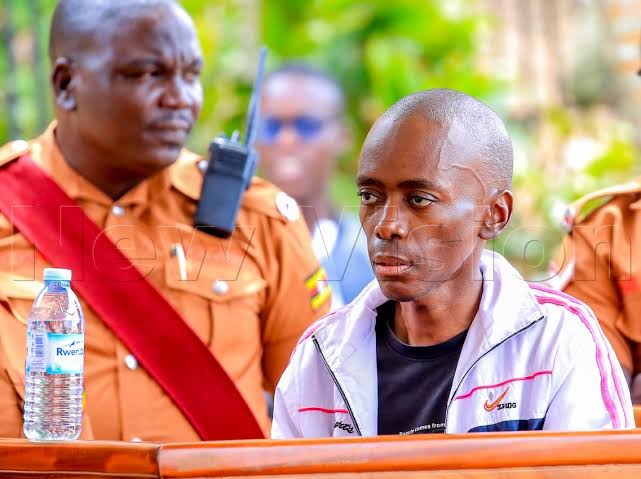
The most recent high-profile application of the death penalty underscores its persistence in egregious domestic cases. On April 30, 2026, the High Court in Kampala (sitting at Ggaba Community Church grounds) sentenced Christopher Okello Onyum (also referred to as Christopher Okello Onyun), a 38- or 39-year-old dual Ugandan-American citizen, to death by hanging for the murder of four toddlers including Eteku Gideon, Keisha Agenorwoth Otim, Sseruyange Ignatius, and Odeke Ryan at the Ggaba Early Childhood D