


MWIINE Andrew Kaggwa
In Uganda, the 1995 Constitution enshrines inherent rights as fundamental entitlements, with Article 23 guaranteeing protections against arbitrary detention and inhumane treatment, and Article 28 ensuring the right to a fair trial and presumption of innocence. These rights, intended as inalienable safeguards for all citizens, are increasingly treated as discretionary “benevolent offerings” subject to the whims of state authorities, political agendas, and systemic inefficiencies. Despite the Constitution’s robust framework, practical implementation often falls short, with delays in judicial processes, prolonged detentions without trial, and selective enforcement eroding the essence of these protections. This discussion examines how bureaucratic obstacles, socio-political pressures, and inadequate accountability mechanisms have transformed Uganda’s inherent rights into conditional privileges, undermining the constitutional promise of justice and equality for those they should benefit.




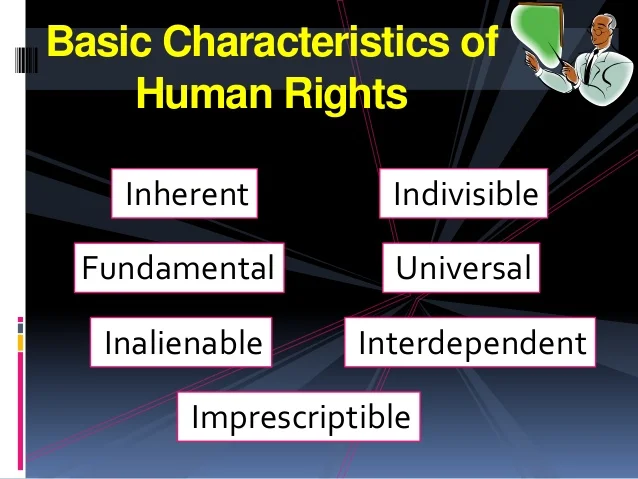
According to the United Nations Human Rights Office of the High Commissioner, Human Rights are rights we have simply because we exist as human beings, they are not granted by the state. These universal rights are inherent to us all, regardless of nationality, sex, national or ethnic origin, color, religion, language, or other status. They range from the most fundamental (Right to life) to those that make life worth living such as the right to food, education, work, health, and liberty. The major concept in the definition of Human Rights is “Inherent,” which is the crux of every human right. Its omission in any way, as far as Human Rights and their application are concerned, defeats the true and natural comprehension of the essence of Human Rights internationally, regionally, and nationally.
“Inherent” literally means that a right is inalienable that it cannot be surrendered or transferred. An inherent right is that which is considered to be part of Natural Law and exists independently of rights created by government or society. They should be seen as fundamental and cannot be taken away or transferred.[1] An inherent right is something you are entitled to just because you exist. It cannot be taken away or given up, like the right to own property or the right to be free. Some rights are created by law and rules, but inherent rights are just part of being a person. They are important because they are help protect us and make sure we are treated fairly.
Human Rights being inherent speaks to the principles of universality, inalienable and indivisible meaning they apply to everyone, cannot be taken away, and are interconnected. These rights govern how individuals interact with each other and with the state, and they protect individuals state power as well as ensuring access to essential resources. Human Rights are essential for a just and equitable society. They ensure that all individuals can live with dignity, participate in society and have their basic needs met. They are the foundation for a world where everyone can reach their full potential.
The Universal Declaration of Human Rights (UDHR) adopted by the UN General Assembly in 1948, was the first legal document to set out the fundamental human rights to be universally protected. The UDHR, together with 2 covenants, the International Covenant for Civil and Political Rights (ICCPR) and the International Covenant for Economic, Social and Cultural Rights (ICESCR), together make up the International Bill of Rights. The preamble of the UDHR affirms the fervency of Human Rights, it states that “Whereas recognition of the inherent dignity and of the equal and inalienable rights of all members of the human family is the foundation of freedom, justice and peace in the world.”, Article 1 of the UDHR further asserts that “All human beings are born free and equal in dignity and rights. They are endowed with reason and conscience and should act towards one another in a spirit of brotherhood.” This affirms that if the inherent rights are to be practicable, the free-born being should be recognized by everyone, everywhere no matter what.
The 1995 Constitution of the Republic of Uganda under Chapter 4 commonly referred to as the Bill of Rights specifically Article 20 (1) is to the effect that “fundamental rights and freedoms of an individual are inherent and not granted by the state”. It has a nexus with Ephesians 2:8-10 which truthfully states that “for it is by grace you have been saved, through faith and this is not from yourselves, it is the gift of God not by works, so that no one can boast…” in the same vein, no one should boast of offering an inherent right, it is just like grace given by virtual of being a child of God , so rights are inherent just by existing.
Contrary to the above, what is normatively supposed to be inherent has been made a benevolent offering by the state. The state models itself as a supreme organ holding custody of these inherent human rights and puts itself in a position of them flowing systematically to the individual and funny enough Ugandans have unequivocally accepted this and religiously worshipped its existence.
Article 23 of the 1995 Constitution provides for freedom against arbitrary detention and inhuman treatment, Article 28 further provides for fair trial and presumption of innocence, Article 21 affirms equality and non-discrimination, Article 29 provides for freedom of expression, assembly and association and Article 39 provides for a right to a clean and health environment. All these rights under Chapter 4 are supposed to be inherent and not state granted, however, in 2025, the state has showcased superficial compliance with these rights through selective action, public pronouncements or limited legal reforms while systemic barriers such as repressive legislation, executive interference and security force impunity prevent citizens from exercising these rights inherently. This has created an environment where rights are treated as discretionary privileges or “Benevolent Offerings” rather than inalienable entitlements that thrive without state obstruction.
I will now labour to demonstrate how the state has on several occasions turned around the concept of inherent-ness into benevolence in the field of respect, promotion and observance of fundamental human rights in Uganda.
According to Article 23 of the 1995 Constitution, arbitrary detention and inhuman treatment is abominable and its one of those rights protected as non-derogable under Article 44 of the Constitution. This provision also mandates court appearance within 48 hours. This aligns with Article 2 of the ICCPR. Despite this, it is publicly known that the government occasionally releases high-profile detainees to signal complian