


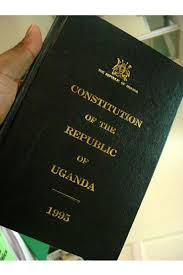
The 1995 Constitution of the Republic of Uganda, enacted on October 8, 1995, represents a pivotal moment in the nation’s legal and political history, emerging from the ashes of a turbulent past marked by authoritarianism, constitutional instability, and civil strife. At its core, the Constitution enshrines a profound principle the sovereignty of the people. Article 1 of the 1995 Constitution unequivocally states that “all power belongs to the people who shall exercise their sovereignty in accordance with this Constitution,” establishing the citizenry as the foundational pillar of governance and an invisible yet indispensable arm alongside the executive, legislature, and judiciary. This legal framework positions citizens not merely as beneficiaries of state authority but as its ultimate source, tasked with shaping the nation’s destiny through democratic participation, civic engagement, and accountability mechanisms.
In theory, the citizenry is the lifeblood of Uganda’s democracy, empowered to vote, petition, protest, and influence policy under a robust constitutional scheme. However, in practice, this paramount arm often finds itself ignored or forgotten, its influence curtailed by legal restrictions, socioeconomic challenges, and political dynamics that prioritize elite interests over the public will. Laws such as the Public Order Management Act (Cap 9), and electoral controversies, such as those surrounding the 2021 general election, have constrained civic space, while constitutional amendments in 2005 and 2018 have sparked accusations of undermining the people’s sovereignty. Marginalized groups, including stateless persons and ethnic minorities like the Banyarwanda, face additional barriers to full participation, further eroding the citizenry’s role. Against this backdrop, the paradox of a constitutionally empowered yet practically sidelined citizenry demands rigorous scrutiny.





This analysis examines the legal architecture of the 1995 Constitution that establishes the citizenry as the paramount arm of government, the mechanisms through which they exercise their authority, the systemic factors contributing to their marginalization, and the legal implications for Uganda’s democratic framework. By situating the citizenry’s role within the broader context of Uganda’s historical struggles and contemporary challenges, this study aims to illuminate the gap between constitutional ideals and practical realities, advocating for reforms to restore the people’s rightful place at the heart of governance.
What is the Citizenry role in the ambits of the Constitutional Framework?
The 1995 Constitution of the Republic of Uganda establishes the citizenry as the cornerstone of the nation’s governance structure, vesting in them the supreme authority to legitimize and direct state actions. This foundational principle is articulated through a series of provisions that collectively define the citizenry as an indispensable arm of government, coequal with the executive, legislature, and judiciary. These provisions not only affirm the sovereignty of the people but also outline the legal parameters for their participation, ensuring that governance reflects their collective will.
I will labour to highlight the Articles in the constitution that bring to light the fact that the citizenry is a paramount co figure in achieving the legal framework under the constitution of Uganda.
National Objectives and Directive Principles of State Policy
The National Objectives and Directive Principles of State Policy, mandates that Uganda’s governance be based on democratic principles, which include regular, free, and fair elections, accountability of public officials, and active citizen participation. These principles serve as a guiding framework for state institutions, ensuring that the citizenry’s role is central to policy formulation and implementation. The directive principles emphasize the state’s obligation to foster an environment conducive to citizen engagement, reinforcing the constitutional vision of a participatory democracy.
Article 1: Sovereignty of the People
Article 1(1) declares: “All power belongs to the people who shall exercise their sovereignty in accordance with this Constitution.” This provision establishes the citizenry as the ultimate source of all governmental authority, rendering the state’s legitimacy contingent upon the consent of its citizens. It mandates that sovereignty be exercised either directly, through mechanisms such as referenda, or indirectly, through elected representatives in Parliament and local councils. Article 1(2) further reinforces this by stating that the Constitution is the supreme law, binding all authorities and persons, thereby ensuring that the citizenry’s sovereignty is upheld as the legal foundation of the state.
Article 38: Civic Rights and Activities
Article 38(1) explicitly recognizes the right and duty of every citizen to participate in the governance of Uganda, whether through voting in elections and referenda or through other lawful means, such as petitions or peaceful demonstrations. Article 38(2) further empowers citizens to engage in peaceful activities to influence government policies, ensuring that the citizenry can actively shape legislative and executive actions. This provision underscores the dual role of citizens as both rights-holders and duty-bearers in the democratic process.
Article 59: Right to Vote
Article 59(1) guarantees every citizen aged 18 and above, of sound mind, the right to vote in free and fair elections conducted by secret ballot at regular intervals. This right is a cornerstone of democratic participation, enabling citizens to directly influence the composition of the executive and legislature. Article 59(2) mandates the state to take measures to ensure that citizens can exercise their voting rights, including voter education and accessible polling stations, thereby reinforcing the citizenry’s role in electing public officials.
Article 29: Protection of Fundamental Freedoms
Article 29(1) guarantees citizens fundamental freedoms, including freedom of speech, expression, assembly, association, and movement, subject to limitations prescribed by law for public order, safety, or morality. These freedoms are essential for enabling citizens to organize, advocate, and hold the government accountable. The protection of these freedoms ensures that the citizenry can form civil society organizations, engage in public discourse, and participate in peaceful protests, all of which are critical mechanisms for influencing governance.
Article 176: Local Gov