


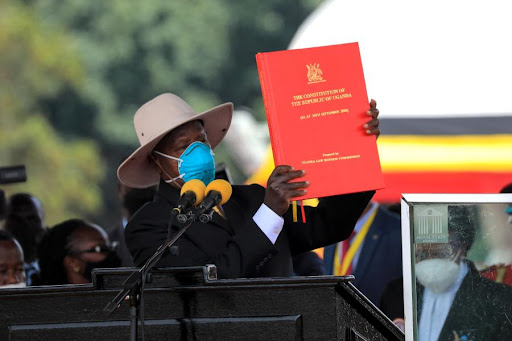
In the sweltering heat of Uganda’s political arena, where the air crackles with the echoes of rallies and the distant rumble of armoured vehicles, the 1995 Constitution stands as both a beacon and a booby trap. Promulgated on October 8, 1995, after a gruelling Constituent Assembly process that drew from the scars of Idi Amin’s terror and Milton Obote’s brutal regimes, this document was hailed as Africa’s progressive masterpiece. It enshrined multiparty democracy, human rights, and crucially the sovereignty of the people. Yet, three decades later, as President Yoweri Museveni clings to power through his sixth term (with whispers of a seventh), the Constitution has morphed into a tool of entrenchment rather than emancipation.
At the heart of this paradox lies Article 3: Defence of the Constitution, a clause that reads like a revolutionary call to arms. But when cross-referenced with Article 1 (Sovereignty of the People) and Article 2 (Supremacy of the Constitution), it reveals a glaring contradiction: a framework that empowers the masses in theory but criminalizes their mobilization in practice. This tension has been weaponized to stifle dissent, labelling democratic protests as “treasonous” threats to the very order it claims to protect. No case exemplifies this perversion more starkly than the ongoing ordeal of Dr. Kizza Besigye, Uganda’s perennial opposition lion, whose repeated treason charges and bail denials in 2025 underscore how Article 3 has become the regime’s shield against the people’s will.





As legal scholar Dr. Busingye Kabumba Baganda has lambasted, the 1995 Constitution is nothing but a “Book of Lies.” In a scathing 2024 address at Makerere University, Kabumba thundered: “The idea that there is even an executive, the idea that there is a budgeting process, Bank of Uganda, the governor that is independent – we know [it’s not]. Like all liars, the Constitution of Uganda tells lies probably to keep peace.” Kabumba’s words cut deep, exposing the chasm between constitutional poetry and political prose. This article dissects that chasm: unpacking Articles 1, 2, and 3; illuminating their inherent contradictions; chronicling how Article 3 has suffocated democracy; and centering the Besigye saga as a microcosm of constitutional betrayal. By the end, you’ll see why Uganda’s supreme law isn’t supreme at all – it’s a straitjacket, tailored for one man.
Let’s now delve into the core of Sovereignty, Supremacy, and the Right to Rebel.
To grasp the betrayal, start at the beginning. Chapter One of the 1995 Constitution lays the foundational trinity Articles 1, 2, and 3. These aren’t mere preambles, they’re the enforceable bedrock, justiciable in courts and invocable by citizens. Yet, their interplay sows the seeds of contradiction.
Article 1: Sovereignty of the People declares:
“(1) All power belongs to the people who shall exercise their sovereignty in accordance with this Constitution.
(2) Without limiting the effect of clause (1) of this article, all authority in the State emanates from the people of Uganda; and the people shall be governed through their will and consent.
(3) All power and authority of Government and its organs derive from this Constitution, which in turn derives its authority from the people who consent to be governed in accordance with this Constitution.”
This is raw populism, straight from the post-NRM rapture. Drafted amid the ashes of bush wars, it rejects elite capture, insisting that sovereignty isn’t delegated but it is direct, exercised via votes, assemblies, and yes, resistance if needed. The framers, including delegates from war-torn Acholi and Teso, envisioned a people-powered state where President Museveni’s NRA transition to civilian rule would birth true democracy.
Enter Article 2: Supremacy of the Constitution, the enforcer:
“(1) This Constitution is the supreme law of Uganda and any other law or custom in conflict with it is null and void to the extent of the inconsistency.
(2) If any other law or any custom is inconsistent with any of the provisions of this Constitution, the Constitution shall prevail, and that other law or custom shall, to the extent of the inconsistency, be void.”
Here, the Constitution crowns itself kingmaker, voiding any subordinate act that dares defy it. It’s the anti-coup bulwark, ensuring President Museveni’s promises of term limits, independent judiciary, free press which should not be mere whims but mandates. In theory, this supremacy empowers citizens to challenge violations, from rigged elections to executive overreach.
But then comes Article 3: Defence of the Constitution, the wildcard:
“(1) It is prohibited for any person or group of persons to take or retain control of the Government of Uganda, except in accordance with the provisions of this Constitution.
(2) Any person who, singly or in concert with others, by any violent or other unlawful means, suspends, overthrows, abrogates or amends this Constitution or any part of it or attempts to do any such act, commits the offence of treason and shall be punished according to law.
(3) This Constitution shall not lose its force and effect even where its observance is interrupted by a government established by the force of arms; and in any case, as soon as the people recover their liberty, its observance shall be re-established and all persons who have taken part in any rebellion or other activity which resulted in the interruption of the observance, shall be tried in accordance with this Constitution and other laws consistent with it.
(4) All citizens of Uganda shal