

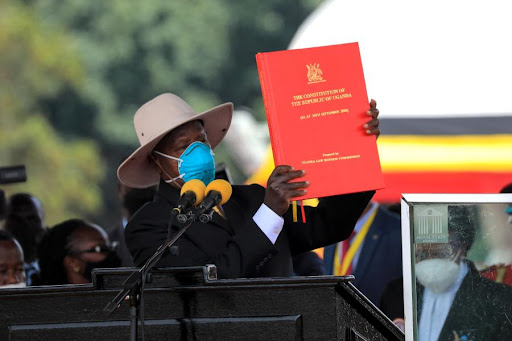
In the sweltering heat of Uganda’s political arena, where the air crackles with the echoes of rallies and the distant rumble of armoured vehicles, the 1995 Constitution stands as both a beacon and a booby trap. Promulgated on October 8, 1995, after a gruelling Constituent Assembly process that drew from the scars of Idi Amin’s terror and Milton Obote’s brutal regimes, this document was hailed as Africa’s progressive masterpiece. It enshrined multiparty democracy, human rights, and crucially the sovereignty of the people. Yet, three decades later, as President Yoweri Museveni clings to power through his sixth term (with whispers of a seventh), the Constitution has morphed into a tool of entrenchment rather than emancipation.
At the heart of this paradox lies Article 3: Defence of the Constitution, a clause that reads like a revolutionary call to arms. But when cross-referenced with Article 1 (Sovereignty of the People) and Article 2 (Supremacy of the Constitution), it reveals a glaring contradiction: a framework that empowers the masses in theory but criminalizes their mobilization in practice. This tension has been weaponized to stifle dissent, labelling democratic protests as “treasonous” threats to the very order it claims to protect. No case exemplifies this perversion more starkly than the ongoing ordeal of Dr. Kizza Besigye, Uganda’s perennial opposition lion, whose repeated treason charges and bail denials in 2025 underscore how Article 3 has become the regime’s shield against the people’s will.

As legal scholar Dr. Busingye Kabumba Baganda has lambasted, the 1995 Constitution is nothing but a “Book of Lies.” In a scathing 2024 address at Makerere University, Kabumba thundered: “The idea that there is even an executive, the idea that there is a budgeting process, Bank of Uganda, the governor that is independent – we know [it’s not]. Like all liars, the Constitution of Uganda tells lies probably to keep peace.” Kabumba’s words cut deep, exposing the chasm between constitutional poetry and political prose. This article dissects that chasm: unpacking Articles 1, 2, and 3; illuminating their inherent contradictions; chronicling how Article 3 has suffocated democracy; and centering the Besigye saga as a microcosm of constitutional betrayal. By the end, you’ll see why Uganda’s supreme law isn’t supreme at all – it’s a straitjacket, tailored for one man.
Let’s now delve into the core of Sovereignty, Supremacy, and the Right to Rebel.
To grasp the betrayal, start at the beginning. Chapter One of the 1995 Constitution lays the foundational trinity Articles 1, 2, and 3. These aren’t mere preambles, they’re the enforceable bedrock, justiciable in courts and invocable by citizens. Yet, their interplay sows the seeds of contradiction.
Article 1: Sovereignty of the People declares:
“(1) All power belongs to the people who shall exercise their sovereignty in accordance with this Constitution.
(2) Without limiting the effect of clause (1) of this article, all authority in the State emanates from the people of Uganda; and the people shall be governed through their will and consent.
(3) All power and authority of Government and its organs derive from this Constitution, which in turn derives its authority from the people who consent to be governed in accordance with this Constitution.”
This is raw populism, straight from the post-NRM rapture. Drafted amid the ashes of bush wars, it rejects elite capture, insisting that sovereignty isn’t delegated but it is direct, exercised via votes, assemblies, and yes, resistance if needed. The framers, including delegates from war-torn Acholi and Teso, envisioned a people-powered state where President Museveni’s NRA transition to civilian rule would birth true democracy.
Enter Article 2: Supremacy of the Constitution, the enforcer:
“(1) This Constitution is the supreme law of Uganda and any other law or custom in conflict with it is null and void to the extent of the inconsistency.
(2) If any other law or any custom is inconsistent with any of the provisions of this Constitution, the Constitution shall prevail, and that other law or custom shall, to the extent of the inconsistency, be void.”
Here, the Constitution crowns itself kingmaker, voiding any subordinate act that dares defy it. It’s the anti-coup bulwark, ensuring President Museveni’s promises of term limits, independent judiciary, free press which should not be mere whims but mandates. In theory, this supremacy empowers citizens to challenge violations, from rigged elections to executive overreach.
But then comes Article 3: Defence of the Constitution, the wildcard:
“(1) It is prohibited for any person or group of persons to take or retain control of the Government of Uganda, except in accordance with the provisions of this Constitution.
(2) Any person who, singly or in concert with others, by any violent or other unlawful means, suspends, overthrows, abrogates or amends this Constitution or any part of it or attempts to do any such act, commits the offence of treason and shall be punished according to law.
(3) This Constitution shall not lose its force and effect even where its observance is interrupted by a government established by the force of arms; and in any case, as soon as the people recover their liberty, its observance shall be re-established and all persons who have taken part in any rebellion or other activity which resulted in the interruption of the observance, shall be tried in accordance with this Constitution and other laws consistent with it.
(4) All citizens of Uganda shall have the right and duty at all times— (a) to defend this Constitution and, in particular, to resist any person or group of persons seeking to overthrow the established constitutional order; and (b) to do all in their power to restore this Constitution after it has been suspended, overthrown, abrogated or amended contrary to its provisions.
(5) Any person or group of persons who, as required by clause (4) of this article, resists the suspension, overthrow, abrogation or amendment of this Constitution commits no offence.”
Article 3 is revolutionary dynamite. Clause 4 explicitly grants citizens a “right and duty” to resist unconstitutional overthrows, even with force, as long as it’s “necessary.” It’s Uganda’s answer to Lockean rebellion theory, codified post-Amin to prevent future juntas. No other African constitution matches this boldness; Kenya’s 2010 charter hints at resistance but stops short of arming it. The drafting debates in 1995 were fierce wherein NRM loyalists wanted dilution, the survivors of Obote’s massacres demanded teeth. With this clause, they won.
So now the question would be, does Article 3 empower the people or it protect the incumbent?
On paper, these articles harmonize in such a way that Sovereignty under Article 1 flows through supremacy under Article 2, which is defended by resistance under Article 3. The people are sovereign, the Constitution supreme as citizens its guardians. But peel back the rhetoric, and the cracks erupt.
First, the definitional dodge in “unlawful means” under Article 3(2). What constitutes “unlawful”? is it Protests? Petitions? Ballot-box revolts? Article 1 demands governance by “will and consent,” yet Article 3 brands non-violent dissent as potential treason if it “amends” the status quo. This vagueness lets the state redefine “unconstitutional” to suit itself. A rigged election becomes “order,” while opposition marches become “overthrow.” As Kabumba notes in his seminal 2012 essay, “The Illusion of the Ugandan Constitution,” this creates a “façade of democracy” where “raw and unmitigated political power is exercised by an increasingly narrow group,” shielded by Article 3’s sword.
Second, the sovereignty-supremacy loop. Article 1 vests power in the people, but Article 2 makes the Constitution the sole conduit interpreted, of course, by institutions the incumbent controls. Courts, packed with NRM appointees who routinely uphold “amendments” that gut sovereignty, like the 2005 term-limit removal or 2017 age-cap scrap. Article 3’s resistance clause? It’s a trapdoor where Citizens can “resist” only if a court deems the violation “unlawful.” But who judges the judges? In Ssemogerere and Others v. Attorney General [Constitutional Petition No. 2 of 1997] [1998] UGSC 1, the Supreme Court affirmed Article 2’s supremacy but dodged Art. 3’s resistance implications, leaving sovereignty theoretical.
Third, the duty vs. right paradox. Article 3(4) imposes a “duty” to resist, yet punishes those who do under colonial-era laws like the Penal Code Act (Cap. 128), which equates protest with treason. This contradicts Article 1’s consent-based governance: If the people withdraw consent through low turnout or boycotts, is that “overthrow”? Kabumba rails against this: “If one asked the Ugandan citizen on the Kampala Street where the power lies, I believe the answer would be that ‘all power belongs to the President, who exercises his sovereignty through the army’.” The Constitution promises rebellion as a remedy but prosecutes it as crime, a contradiction that turns democratic fire into treasonous ash.
In essence, Articles 1 and 2 birth a sovereign people, while Article 3 slays them if they stir. This isn’t synergy but it’s sabotage, designed to entrench the executive while mocking the masses.
Metaphorically speaking, is Article 3 of the 1995 Constitution a stifler of democracy?
Here is the baffling answer, born in hope, Article 3 has aged into a weapon. Intended to bar coups, it’s been flipped to criminalize critique, fostering a “semi-authoritarian regime” where “symbolic importance of the legislature and relatively free media contend with fundamentally a dictatorship at the centre.” which seized power in 1986 through the barrel of a gun and ironically, without invoking any constitution, has amended the document 13 times deleting term limits, the age cap, and more all while wielding Article 3 to silence foes.
The 2017–2018 age-limit saga epitomizes the perversion. To let 74-year-old Museveni run again, NRM MPs rammed through Bill No. 18, amid bribery scandals and military sieges on Parliament. Opposition cried foul: This “amendment” violated the “basic structure” doctrine and unamendable core elements like sovereignty and supremacy.
he Constitutional Court, in Opiyo v. Attorney General [Constitutional Petition No. 45 of 2017] [2018] UGCC 1, heard arguments that the process breached Article 3 by using “unlawful means” including intimidation and vote-buying. Petitioners invoked Article 3(4)’s duty to resist, but the court sidestepped, upholding the amendment 6–1 while fining MPs for procedural lapses. Justice Christopher Madrama dissented: “The amendment process was a subversion of the Constitution’s supremacy [Art. 2], tantamount to an internal overthrow.” Dissent crushed, and President Museveni ran and “won” –in 2021.
A companion case, Male Mabirizi v. Attorney General [Constitutional Petition No. 10 of 2018] [2019] UGCC 2, challenged the bill under Article 3(2)’s treason poise. The court dismissed, ruling protests against it weren’t “unlawful resistance” but failed to address how the amendment itself skirted Article 1’s popular sovereignty. Result? Democracy’s guardrail became its gag.
Article 3’s treason clause (2) has felled giants. In 2005, as term limits loomed, Besigye, Museveni’s ex-doctor and 2001 rival faced treason for “plotting overthrow” via his Reform Agenda. Charged under Penal Code Section.23 (As it was then) mirroring Article 3 of the Constitution, his Uganda v. Kizza Besigye [Criminal Session Case No. 001 of 2006] [2006] UGCC 1 dragged for years, with courts invoking Article 3 to justify detention despite Article 29’s assembly rights. He was acquitted in 2006, but the message? Challenge power, court will aver treason.
Dr. Busigye Kabumba, dissecting such cases, warns: “The Constitution is essentially an illusion… a fruit of a poisonous tree.” Protests that are meant to embody Article 1’s consent, are recast as Article 3 threats, breeding self-censorship.
Rtd Col Dr. Kizza Besigye; Treason, Bail Denials, and Article 3’s Latest Victim
No story captures Article 3’s chokehold like Dr. Kizza Besigye’s 2025 saga. At 69, the Forum for Democratic Change (FDC) founder arrested seven times since 2001 embodies the contradiction: A man invoking Article 1’s sovereignty, only to be branded Article 3 traitor.
Besigye’s woes began November 16, 2024, abducted in Nairobi at a book launch hosted by Kenya’s Martha Karua. Extradited (illegally, critics say), he faced the General Court Martial on charges of “soliciting military support in Geneva, Greece, and Nairobi to prejudice Uganda’s defense” code for treason under Article 3(2). The Supreme Court ruled military trials of civilians unconstitutional in Attorney General v. Ochan and Others [Constitutional Appeal No. 1 of 2024] [2025] UGSC 1, transferring him to civilian court. But freedom? None yet…
On February 21, 2025, Nakawa Chief Magistrate’s Court formally charged Besigye, aide Hajj Obeid Lutale, and Capt. Denis Oola with treason: “Conspiring between 2023–2024 to overthrow the government by force of arms” (Uganda v. Besigye, Lutale & Oola [Criminal Case No. 12 of 2025] [2025] UGMC 3). But bail pleas have been denied thrice.
May 22, 2025: Mandatory 180-day bail bid failed; the trial magistrate absented, stalling proceedings (Besigye & Lutale v. Uganda [High Court Bail Application No. 78 of 2025] [2025] UGHC 23).
August 9, 2025: Justice Emmanuel Baguma’s bombshell. Besigye argued detention exceeded 180 days from November 2024 (Art. 23(6)(b)). Justice Baguma reset the clock to February 21, denying bail: “The charges under Article 3 demand caution; interference risks are high” (Besigye & Lutale v. Uganda [High Court Misc. Cause No. 112 of 2025] [2025] UGHC 34). Amnesty International slammed it as “unlawful,” linking it to 2026 polls.
By December 2025, Besigye languishes in Luzira, health crumbling, launching the People’s Front for Freedom from his cell. Lawyer Erias Lukwago called the ruling “absurd,” echoing Kabumba: “Article 3 protects the Constitution? No, it protects the captors.” Besigye’s “treason”? Alleged chats with exiles still the same “consent” Article 1 demands.
This isn’t justice, it’s Article 3 as Article 1’s assassin. Protests against 2021 fraud? Treasonous. Rally calls? Overthrow plots. Sovereignty dies in detention.
Conclusively, it will be known as the Constitution that ate its Children.
For thirty years, Article 3 has stood like a loaded AK-47 propped in the corner of Uganda’s living room beautiful, terrifying, and pointed in the wrong direction.
It was written by survivors of mass graves and torture chambers who swore “never again.” They believed that if they inscribed the right to rebel in black and white, no future tyrant could ever claim legitimacy after stealing power. They were half-right. The clause did indeed become untouchable. What they never imagined is that the tyrant would not need to suspend the Constitution, he would simply inherit it, hollow it out clause by clause, and then use Article 3 itself as the handcuffs for anyone who dared to remind him that sovereignty still belongs to the people.
That is the final, bitter contradiction: Article 1 says the people are sovereign. Article 2 says the Constitution is supreme. Article 3 says you may resist anyone who violates either of the above unless the violator happens to control the army, the police, the judiciary, the Electoral Commission, and the prison keys. Then resistance becomes “treason,” the sovereign becomes the accused, and the supreme law becomes the prosecution’s star witness.
Dr Kizza Besigye, gaunt and grey after yet another year in Luzira, is not just a prisoner. He is the living proof that the 1995 Constitution has devoured the very generation that fought for it. The man who once treated Museveni’s bush-war wounds is now buried alive under the same document they both swore to defend charged with plotting to overthrow a government that long ago overthrew the spirit of that document.
Dr Busingye Kabumba put it with brutal clarity in 2024: “This Constitution is a book of lies. Beautiful, well-written lies. But lies all the same.”
The lies are almost complete. Term limits, gone. Age limits, gone. Independent institutions, gone. The only thing still intact is Article 3, gleaming and lethal, waiting for the day when the people finally decide that the duty it imposes is heavier than the fear it inspires.
When that day comes and every denied bail, every rigged election, every midnight knock brings it closer the regime will discover what the framers understood in 1995: a constitution that explicitly authorises rebellion cannot be killed by amendment. It can only be killed by the people refusing to use it. Until then, Article 3 remains the most honest clause in the entire document. It does not pretend there is peace. It simply tells you, in plain language, what must be done when the lies finally become unbearable.
The gun is still in the corner. One day, someone will pick it up not to overthrow the Constitution, but to remind the country what the Constitution actually says.
On that day, the book of lies will either be closed forever, or it will finally be read aloud, in full, by a people no longer willing to be its victims.
The choice is not for President Museveni anymore. Under Article 1, it never was.


Discussion about this post