


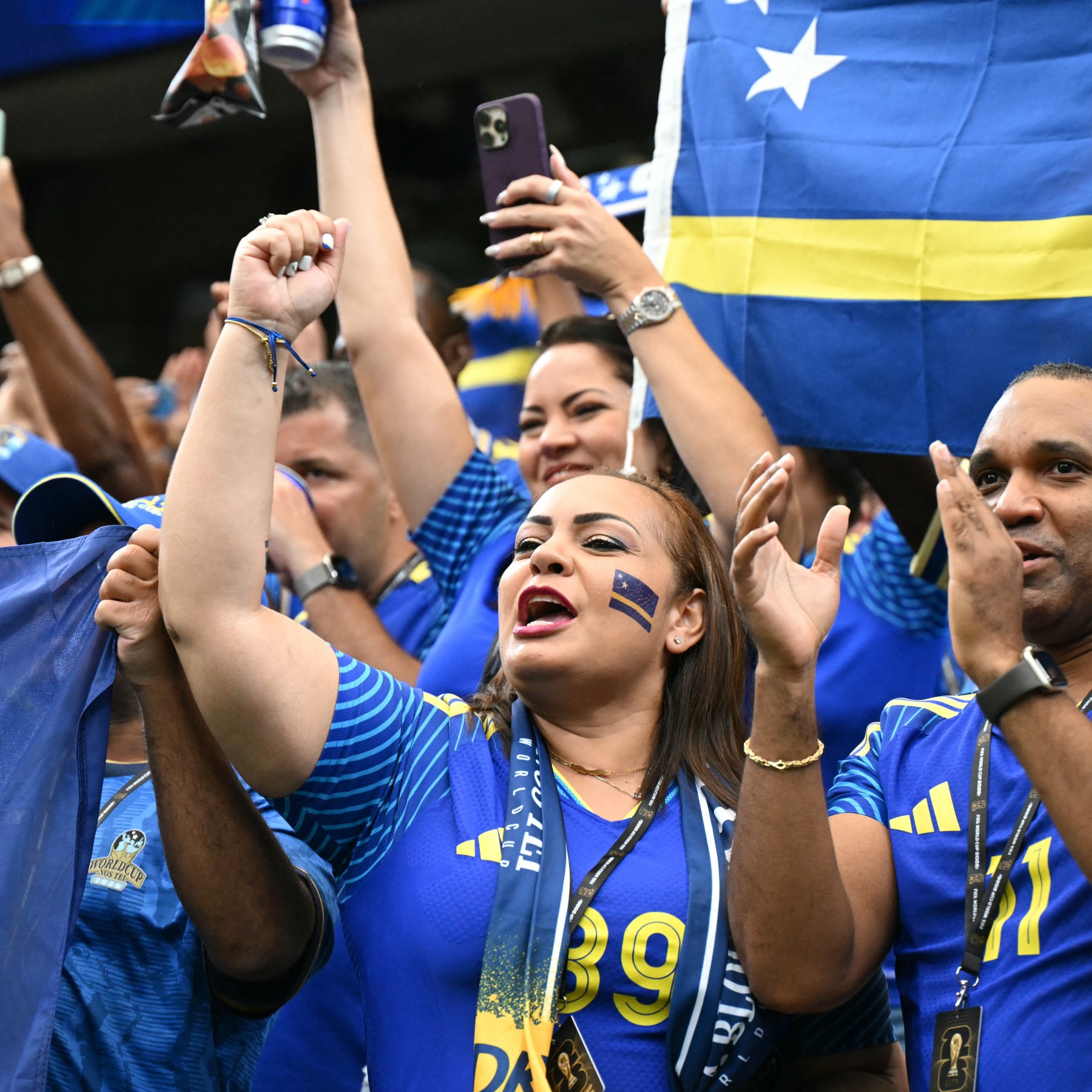
The Fédération Internationale de Football Association (FIFA) has long promoted the ideal that football transcends borders, ideologies, religions, and politics. The World Cup, often described as humanity’s largest peaceful gathering, represents not merely a sporting contest but a celebration of international solidarity. Yet, as the 2026 FIFA World Cup unfolds across the United States, Canada, and Mexico, the foundational premise that “football unites the world” is facing unprecedented scrutiny.
Recent immigration restrictions, visa denials, travel bans, and heightened security measures imposed by the United States have reignited a fundamental question in international law: Can a global sporting event truly remain apolitical when hosted by a sovereign state exercising its sovereign powers of immigration control and national security?





The controversy has intensified following reports of visa denials affecting officials, journalists, support staff, and even FIFA-accredited referees, despite the tournament’s global character. Critics argue that the United States’ foreign policy objectives are colliding with FIFA’s commitment to universal participation, thereby transforming a sporting spectacle into an arena of geopolitical contestation. Supporters, however, contend that sovereign states retain an inherent right under international law to regulate entry into their territory and protect national security interests.
This article examines the legal implications of these restrictions, evaluates whether politics should have a place on the football pitch, analyses relevant international jurisprudence, and assesses whether the current situation amounts to what some commentators have labelled a “global sporting disaster.”
The United States has maintained various travel restrictions affecting citizens from several states. Although exemptions have been created for players and certain essential personnel participating in the World Cup, concerns remain regarding the exclusion of fans, journalists, support staff, and football officials from affected countries. Reports indicate that a number of Iranian officials and support staff were denied visas, while Somali referee Omar Abdulkadir Artan was prevented from entering the United States despite FIFA accreditation.
Human rights organisations, including Amnesty International and the American Civil Liberties Union, have warned that immigration policies, heightened border enforcement, and restrictions on movement risk undermining the inclusive spirit of the tournament.
These developments raise difficult questions about the relationship between sovereignty and international cooperation.
International law recognises that every sovereign state possesses the authority to regulate admission into its territory. This principle derives from the classical conception of sovereignty articulated in the jurisprudence of the Permanent Court of International Justice and subsequently reflected in state practice.
However, sovereignty is not absolute.
Modern international law imposes obligations arising from treaty commitments, customary international law, and internationally accepted principles of non-discrimination. When a state voluntarily hosts a global sporting event, it assumes responsibilities extending beyond ordinary domestic administration.
The World Cup is not a national event. It is a global public event entrusted to a host state on behalf of the international community.
Consequently, a tension emerges between (1) The sovereign right of the host state to control its borders and (2)The legitimate expectation that all participating nations and their citizens will enjoy meaningful access to the tournament.
The challenge is therefore not whether the United States may regulate entry. Rather, the question is whether those regulations are proportionate, non-discriminatory, and compatible with the international character of the competition.
The notion that sport should remain separate from politics is more aspirational than a historical reality. Perhaps the most famous example is the exclusion of apartheid South Africa from international sporting competitions.
In this instance, sport became an instrument of international pressure against racial discrimination. The international community accepted that political considerations could legitimately influence sporting participation because the objective was the protection of fundamental human rights.
The 1980 Moscow Olympics and the 1984 Los Angeles Olympics witnessed reciprocal boycotts driven by geopolitical tensions during the Cold War.
These events demonstrated how quickly sport could become a casualty of international politics. Rather than promoting unity, sporting arenas became extensions of ideological confrontation.
In Mutu and Pechstein v. Switzerland [2018] ECHR 324 , the European Court of Human Rights reaffirmed that sporting institutions do not exist outside the framework of human rights law. The Court emphasised that sporting governance must remain consistent with broader legal principles of fairness and due process.
In Union des associations européennes de football (UEFA) v Jean-Marc Bosman [1995] ECR I-4921), the Court of Justice of the European Union recognised that sporting regulations cannot arbitrarily restrict freedoms protected under law.
Although arising in the context of labour mobility, the case established an