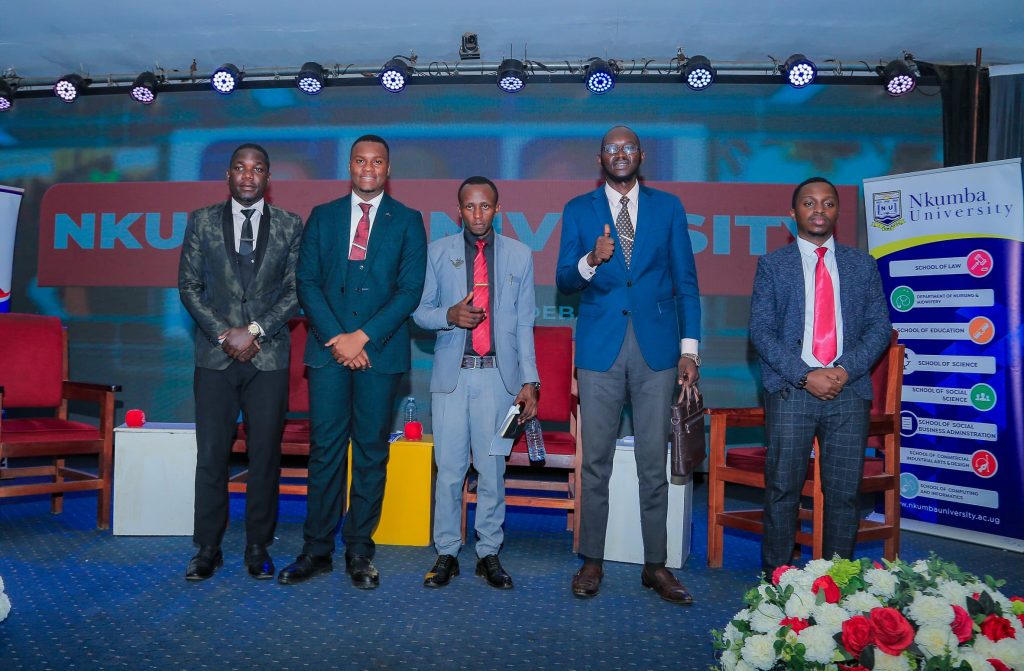

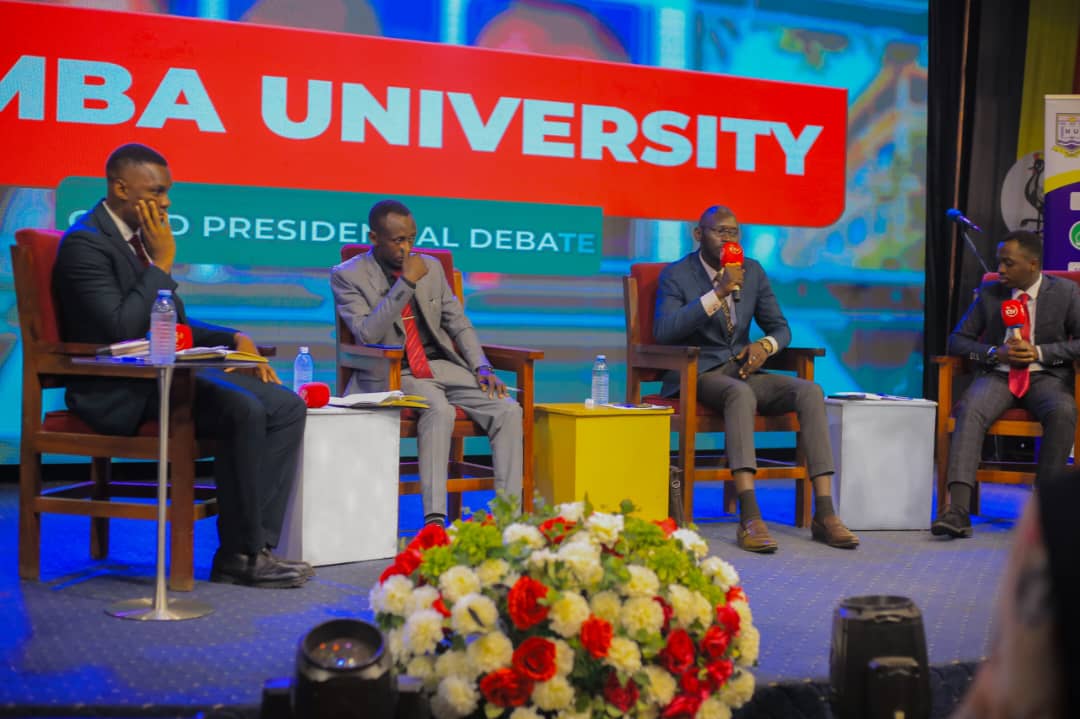
At Nkumba University, the race for guild leadership entered a decisive phase on Wednesday Afternoon as three presidential aspirants squared off in a live televised debate on Kingdom TV.
The encounter, marked by measured exchanges and policy contrasts, offered students a clearer view of the competing visions ahead of Saturday’s polls.
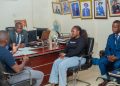


Meticulously guided by the moderator, the debate saw Makumai Deogratius Anyama, Ssentiba Martin SSempijja, and Koy Clinton Nasiima, each outlining priorities ranging from digital access to student unity, while attempting to strike a balance between ambition and feasibility.
For National Resistance Movement (NRM) flag bearer, Makumai Deogratius, the question of campus internet access stood at the center of his submission. He called for a collaborative approach involving multiple stakeholders. “Reliable internet access is essential to meet today’s students’ academic needs, and it should be prioritized,” he said, proposing a roundtable dialogue with university management and IT bodies in the country. He says his candidacy is rooted in experience and advocacy. “I am committed to serving students and ensuring their voices are heard.”
His independent rival, Mr. SSempijja, struck a more cautious tone, emphasizing engagement over immediate pledges. “I may not make immediate promises,” he noted, “but I am committed to engaging with campus authorities to explore workable solutions.” While also acknowledging the urgency of reliable internet, he positioned himself as a pragmatic negotiator prepared to push for progress.
Meanwhile, Mr. Nasiima centered his message on cohesion and stability, urging a shift away from confrontational methods. “I believe in unity, dialogue, and peaceful engagement over strikes,” he said, arguing that stronger communication between leaders and students could foster a more supportive academic environment.
Open-air campaigns will take place on Friday, 24th April. The Guild Electoral Commission has urged calm and discipline as students prepare to vote on 25th April.
Student politics at Nkumba have long mirrored broader national dynamics, where party affiliations, independent voices, and grassroots mobilization intersect.
In last year’s tightly contested race, Derrick Mawanda won Katende Muhammad by a narrow margin, setting the unpredictable nature of guild elections. The NRM candidate at the time, Amanya Marvin, finished third, which proved shifting student allegiances.
As polling day draws closer, the outcome remains uncertain. Yet the debate has sharpened the contours of choice before the electorate, between negotiation and immediacy, unity and assertiveness, continuity and change. For many students, the question now is not only about oratory skills but also about who can translate words into action once the ballots are counted.