



Nkumba University’s long-serving Prof. John Chrysostom Ssekamwa passed away this morning at the age of 91. At the time of his demise, Prof. Ssekamwa was still serving the University as a senior lecturer and consultant.
To many academicians, his death marks the end of an era for a scholar widely regarded as one of the architects of modern teacher education in Uganda.


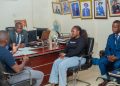


University colleagues described him as a mentor of mentors whose influence will continue to shape generations. “My last academic engagement with him was last year, when he translated my article, ‘Climate Change: We Are Finished,’ into Luganda. He never retired from teaching, he remained intellectually active and committed to guiding students and staff until his final days. I extend my heartfelt condolences to his family and the entire academic fraternity.” Said Associate Prof. Norman Nsereko.
Born on November 29th, 1935, Ssekamwa’s life journey mirrored Uganda’s own educational evolution, from colonial-era schooling systems to the expansion of higher education in the post-independence period.
Beginning his career as a secondary school teacher in 1958, he entered the profession at a time when trained educators were in short supply, quickly distinguishing himself through discipline and intellectual curiosity.
Determined to deepen his expertise, he pursued advanced studies both locally and abroad, earning degrees in education and later a PhD from Makerere University in 1985.
His academic exposure at the Institute of Education in London and Teachers College at Columbia University under a Fulbright Scholarship broadened his global outlook, shaping his lifelong advocacy for relevant and context-driven education systems.
Ssekamwa joined Makerere University in 1968 as a lecturer of history before transitioning into education, where his impact would be most deeply felt. Rising steadily through the ranks, from senior lecturer to full professor, he became Dean of the School of Education in 1993, a position he held until 2004.
During this period, Uganda was grappling with rebuilding its education system after years of political and economic instability. Ssekamwa played a pivotal role in reforming teacher training, strengthening curriculum development, and restoring academic standards. “He believed education should not just produce graduates, but citizens capable of transforming society.” Dr. Ester Namugumya, recalled.
In 2005, he joined Nkumba University as a Professor of Education and also served as the Dean of the then School of Education and Humanities.
Beyond the classroom, Ssekamwa was a prolific writer. His seminal book, History and Development of Education in Uganda (1997), remains a foundational text in universities and teacher training institutions. His scholarship also explored African indigenous knowledge systems and Baganda cultural traditions, reflecting his conviction that education must remain rooted in local contexts even as it engages global ideas. “He consistently challenged policymakers to think beyond superficial reforms,” said Nkumba University Vice Chancellor, Prof. Jude Lubega. “For him, meaningful change required understanding history, culture, and the real needs of society.” He added.
For over six decades, Ssekamwa mentored thousands of students, many of whom now occupy influential roles in academia, government, and the private sector. His legacy, colleagues say, lies not only in his writings but in the human capital he helped shape.
Known for his personal discipline and strong work ethic, Ssekamwa often attributed his longevity in academia to “devotion to duty, time consciousness, and a desire to help others progress.” These principles, he frequently told students, were essential for both personal and national development.
As Uganda continues to expand its education sector, his life story stands as a reminder of the foundational role played by early scholars in building the country’s intellectual infrastructure.