


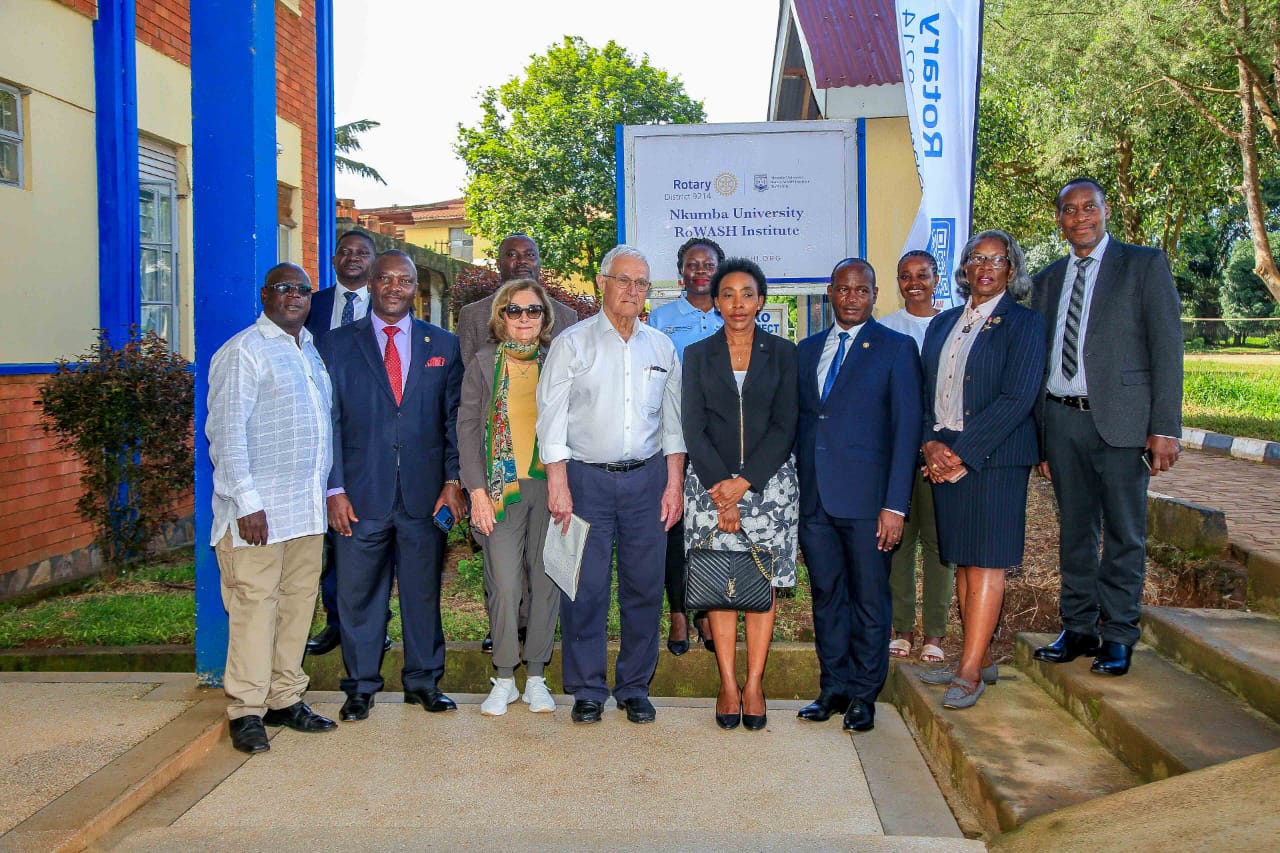
Nkumba University Rotary Water, Sanitation and Hygiene Institute (RoWASHi) is set to embark on a national programme that will train and professionally certify 100 Water, Sanitation and Hygiene (WASH) technicians from 50 public healthcare facilities across Uganda.
Funded through the Rotary Foundation Grant, the training will commence on 23rd July 2026 at Nkumba University and is aimed at addressing critical gaps in the management, operation, and maintenance of water and sanitation systems in healthcare facilities across Uganda.




The project is expected to improve infection prevention and control, reduce breakdowns in WASH infrastructure through preventive maintenance, strengthen institutional capacity, and contribute to Uganda’s efforts to achieve Sustainable Development Goal Six (SDG 6) on clean water and sanitation.
According to Nkumba University Vice Chancellor Prof. Jude Lubega, the flagship training programme marks the peak of nearly two years of planning and preparation by the Rotary Water, Sanitation and Hygiene Institute (RoWASHi). “We have been preparing for this for close to 2 years now. Universities must move beyond their traditional role of teaching and research to become active partners in addressing society’s most pressing challenges. Through partnerships with development partners such as Rotary, we will be equipping these health practitioners and plumbers with practical competencies that will strengthen healthcare systems, improve public health outcomes, and advance Uganda’s sustainable development agenda,” Prof. Lubega said.
He noted that access to safe water and properly functioning sanitation systems remains one of the foundations of quality healthcare. “Healthcare facilities cannot effectively prevent infections or provide quality care without reliable water, sanitation and hygiene services. By investing in the people who manage these systems, we are creating sustainable solutions that will continue benefiting communities long after the project has ended,” he added.
The programme targets WASH technicians working in public healthcare facilities, while also engaging local governments, ministries responsible for health and water, universities, technical institutions, development partners, non-governmental organisations, community-based organizations, researchers and students.
Participants will undergo intensive competency-based training covering healthcare plumbing installation and maintenance, water systems management, water quality testing and monitoring, infection prevention and control, water safety planning, wastewater and drainage management, occupational health and safety, as well as regulatory compliance and documentation.
Successful participants will undertake both practical and theoretical assessments before receiving professional certification.
RoWASHi Director Amelia Nabukonde said the programme has been designed to respond to long-standing capacity gaps that have affected the functionality and sustainability of WASH infrastructure in health facilities. “Many healthcare facilities have invested in water and sanitation infrastructure, but sustaining these systems requires skilled professionals who understand both the technical and public health dimensions of WASH. This programme is building that much-needed workforce.” says Nabukonde said.
She explained that the institute’s approach goes beyond classroom training by emphasizing practical skills, continuous professional development and institutional partnerships. “Our focus is not simply to certify technicians but to create professionals capable of preventing system failures, improving water quality management and strengthening infection prevention practices in healthcare facilities. Ultimately, patients, healthcare workers and surrounding communities will be the greatest beneficiaries,” she said.
To ensure long-term impact, RoWASHi has integrated monitoring and evaluation throughout the project. Progress will be measured through indicators including the number of technicians certified, improvements in the functionality of WASH systems, reductions in infrastructure failures, enhanced infection prevention and control practices, and increased institutional capacity for sustainable WASH management.
The implementation model began with comprehensive needs assessments conducted in collaboration with healthcare facilities, government institutions, local authorities and development partners to identify priority capacity gaps before tailored training interventions are delivered.
The institute also places sustainability at the center of its programming by working closely with universities, local governments, healthcare institutions and development partners to establish continuous professional development pathways and strengthen local ownership of WASH systems.
Established in 2025, the Rotary Water, Sanitation and Hygiene Institute (RoWASHi) is a partnership between Nkumba University and Rotary International District 9214 that seeks to advance professional training, research and innovation in water, sanitation and hygiene. Since its inception, the institute has steadily expanded its partnerships with government agencies, Rotary, academia and development partners to support evidence-based solutions for Uganda’s WASH challenge.
The latest certification programme marks RoWASHi’s flagship national intervention and reinforces Nkumba University’s growing contribution to improving healthcare delivery through skills development, research and strategic partnerships.
As Uganda continues to strengthen its healthcare system, university leaders believe investing in specialized WASH professionals will not only improve the reliability of healthcare infrastruc