


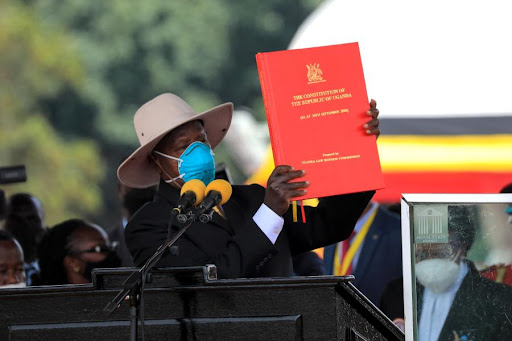
As Uganda marks the 30th anniversary of its 1995 Constitution on October 8, 2025, the document stands as a pivotal milestone in the nation’s turbulent history. Promulgated after years of political instability, it promised a new era of democracy, human rights, and governance. Yet, three decades later, reflections from legal experts, civil society, and scholars reveal a mixed legacy: significant achievements overshadowed by persistent challenges, including manipulations that have entrenched executive power. This article explores the background of the Constitution’s creation, its key gains, and ongoing challenges, drawing on landmark case law, insights from renowned scholars like Dr. Busingye Kabumba, and perspectives from President Yoweri Museveni’s autobiography, Sowing the Mustard Seed.
Uganda’s post-independence history was marred by constitutional upheavals that set the stage for the 1995 document. The 1962 Independence Constitution established a federal system but was suspended in 1966 by Prime Minister Milton Obote, who introduced a republican constitution vesting immense powers in the presidency. This was followed by the 1967 “Pigeonhole Constitution,” further centralizing authority. Idi Amin’s 1971 coup abolished these frameworks, ruling by decree until his ouster in 1979. Subsequent regimes under Yusuf Lule, Godfrey Binaisa, and Obote’s second term (1980–1985) perpetuated instability, with widespread human rights abuses and military dominance.





The National Resistance Movement (NRM), led by Yoweri Museveni, seized power in 1986 after a five-year bush war. Museveni, in his 1997 autobiography Sowing the Mustard Seed: The Struggle for Freedom and Democracy in Uganda, frames this period as planting the “mustard seed” of democracy, a metaphor for gradual democratic growth in a fractured society. He argues that for the seed to flourish, the “soil” (Uganda’s political landscape) must be prepared, critiquing hasty multipartyism in favor of a “no-party” movement system to foster unity. Ironically, Museveni lambasts African leaders who overstay in power, stating in the book that such rulers hinder progress, a view that contrasts with his own 39-year tenure.
To legitimize his rule, Museveni established the Uganda Constitutional Commission (UCC) in 1988, chaired by Justice Benjamin Odoki, to draft a new constitution through public consultations. Over 25,000 submissions were collected, reflecting diverse views on governance, human rights, and federalism. A Constituent Assembly (CA), elected in 1994 with 284 delegates (mostly NRM-aligned), debated the draft from March 1994 to September 1995. Challenges included NRM influence, factionalism, and debates over multipartyism, which was initially suspended under Article 269. The CA adopted the Constitution on September 22, 1995, and it was promulgated on October 8, establishing a quasi-parliamentary system with an executive president, legislature, and judiciary. Odoki later highlighted unique “home-grown” elements, such as the emphasis on unity and social justice, influenced by Uganda’s history of division.
Dr. Busingye Kabumba, a prominent constitutional scholar, critiques this process in his writings, arguing it was undemocratic. In a chapter on the Constitution as a “tool for dictatorship,” he notes Museveni’s unilateral appointments to the UCC and daily interventions in CA debates, creating a “false majority” to entrench NRM interests.
Uganda’s post-independence history was marred by constitutional upheavals that set the stage for the 1995 document. The 1962 Independence Constitution established a federal system but was suspended in 1966 by Prime Minister Milton Obote, who introduced a republican constitution vesting immense powers in the presidency. The “Pigeonhole Constitution,” further centralizing authority. Idi Amin’s 1971 coup abolished these frameworks, ruling by decree until his ouster in 1979. Subsequent regimes under Yusuf Lule, Godfrey Binaisa, and Obote’s second term (1980–1985) perpetuated instability, with widespread human rights abuses and military dominance.
The 1995 Ugandan Constitution book cover, symbolizing the foundation of human rights protections. It enshrines a robust Bill of Rights (Chapter Four), protecting freedoms of expression, assembly, and equality, while prohibiting torture and discrimination. This framework has enabled the ratification of international treaties and conventions on culture and human rights, facilitating capacity building and cooperation in these areas. For instance, it has supported advancements in environmental management and social justice, aligning with global standards.
Decentralization under Chapter Eleven empowered local governments, initially with 35 districts, promoting grassroots democracy and service delivery. This has led to improved citizen participation, better local governance, and the ability to bring services closer to the people, such as in health and education. Environmental and natural resource management has been devolved to districts since 1996, enhancing local accountability. While it has sometimes increased local conflicts, it has overall reduced national-level tensions by distributing power.
The document also advanced gender equality through affirmative action, such as reserved parliamentary seats for women, ensuring gender balance and fair representation. This has led to progress in women’s political leadership, with women occupying significant positions and contributing to policies on education and climate action. The Constitution prohibits gender discrimination, sets the marriage age at 18, and provides equal rights in marriage, opposing practices that violate women’s dignity. The establishment of the Equal Opportunities Commission has further worked to eliminate discrimination in employment and other areas.
Economically and socially, it facilitated stability, enabling growth and poverty reduction in the early years. Museveni’s Mustard Seed credits this to the NRM’s focus on unity, arguing the Con