

• Google News
  • Contact us
  • Privacy Policy
  • Terms of use
  • Authors
Thursday, June 4, 2026
  • Login
Nkumba University News
  • Home
  • News
  • VC’s diary
  • Entertainment
  • Business
  • Opinion
  • Health
  • Education
  • University events
  • Law Blogs
  • Sports
No Result
View All Result
  • Home
  • News
  • VC’s diary
  • Entertainment
  • Business
  • Opinion
  • Health
  • Education
  • University events
  • Law Blogs
  • Sports
No Result
View All Result
Nkumba University News
No Result
View All Result

Trump’s Transactional Peacemaking: Triumphs, Fragile Truces, and the Dealmaker Legacy

Mwiine Andrew Kaggwa by Mwiine Andrew Kaggwa
February 24, 2026
in Law Blogs, News
Reading Time: 6 mins read
A A
0
Trump’s Transactional Peacemaking: Triumphs, Fragile Truces, and the Dealmaker Legacy
0
SHARES
3k
VIEWS
Share on FacebookShare on Twitter

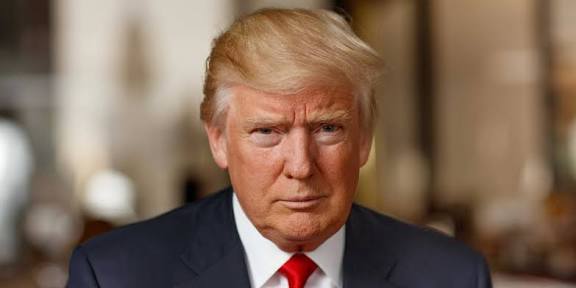
In his second term, President Donald Trump has aggressively pursued a role as the world’s preeminent dealmaker, brokering a series of high-profile agreements aimed at resolving entrenched conflicts. 

From the Caucasus to Southeast Asia, these efforts often announced with fanfare at White House ceremonies or via social media have been touted as historic breakthroughs, with Trump claiming to have “ended eight unendable wars” since January 2025. Supporters hail them as evidence of “peace through strength,” leveraging U.S. economic might and personal diplomacy to halt violence. Yet, a closer examination reveals a pattern of ambitious frameworks yielding temporary halts rather than enduring resolutions, with several already fraying amid violations and renewed hostilities. This article dissects the scope, outcomes, motivations, and legal underpinnings of Trump’s 2025 diplomatic surge, drawing on diverse sources to assess its substance beyond the spectacle.


RelatedArticles

Nkumba University PhD Candidate Proposes National Scale-Up of Youth Maternal Health Model

Nkumba University PhD Candidate Proposes National Scale-Up of Youth Maternal Health Model

June 4, 2026
3k
Kimuli (L), Odeke (R)

Kimuli Hands Over as Dean of Students, Urges Successor to Prioritize Students’ Welfare

June 4, 2026
3k
Nkumba University Concludes Two-Day Master’s Research Seminar

Nkumba University Concludes Two-Day Master’s Research Seminar

May 17, 2026
3.1k

In 2025, President Donald Trump’s second term has seen an intense flurry of diplomatic activity, with the administration claiming credit for brokering peace in at least eight longstanding conflicts through a combination of high-profile summits, economic incentives, and personal mediation. Official White House statements and reports from sources like Reuters and AP document major agreements targeting regions long plagued by violence, often announced amid ceremonies in Washington or abroad and frequently tied to U.S. trade deals, resource access, or infrastructure projects.

These include frameworks for ceasefires, disarmament, border resolutions, and economic integration, with Trump personally hosting leaders and leveraging tariffs or investments as pressure tools. Pro-Trump accounts on X and supportive media highlight these as transformative breakthroughs, while neutral observers note that many remain frameworks or declarations rather than fully ratified treaties, with enforcement mechanisms varying in strength.

Key efforts span the Middle East, Africa, Asia, and Europe: a historic Armenia-Azerbaijan agreement signed at the White House in August, establishing peace after decades of Nagorno-Karabakh conflict and creating the “Trump Route for International Peace and Prosperity” (TRIPP) corridor with U.S. development rights, a multi-phase Gaza ceasefire under Trump’s 20-Point Plan, initiated in October with hostage releases and UN-backed elements, though implementation remains fragile, added to that a reaffirmed commitments between Rwanda and the Democratic Republic of Congo in December, building on a June accord to disarm rebels and enable U.S. mineral access, despite immediate post-signing violations.

A Thailand-Cambodia truce expanded in October but later suspended amid renewed border incidents, de-escalations involving Israel-Iran and India-Pakistan following brief flare-ups, water-sharing progress on Egypt-Ethiopia’s Nile dam tensions and ongoing economic normalization in Serbia-Kosovo. These initiatives, often emerging from rapid negotiations and U.S. leverage, reflect Trump’s transactional style, aiming to reduce global hotspots while advancing American economic and strategic interests, though their long-term viability continues to be tested by on-the-ground realities.

The Armenia-Azerbaijan agreement stands out as a clear success, ending 35 years of intermittent war over Nagorno-Karabakh. Signed amid White House pomp, it includes a U.S.-backed economic corridor granting Washington exclusive development rights, potentially unlocking $ billions in trade. Leaders Nikol Pashinyan and Ilham Aliyev credited Trump’s “personal engagement,” with the deal banning Russian forces and aligning with U.S. strategic goals to counter Moscow’s influence. Legally, it upholds territorial integrity per OSCE Minsk Group principles, though critics note it overlooks ethnic Armenian displacements under IHL.

In Gaza, the 20-Point Plan marked a phased breakthrough, securing a ceasefire after two years of devastation. UNSC approval in November provided international legitimacy, with partial hostage releases (including Americans) and aid flows resuming. Trump’s mediation, involving Qatar and Egypt, has been praised for averting famine, though the plan’s “stabilization force” raises sovereignty concerns under international law.

Not all efforts have endured. The Thailand-Cambodia accords, signed amid U.S. trade incentives, collapsed within weeks. Renewed airstrikes and mine accusations by December violated the unconditional ceasefire, highlighting weak enforcement. Analysts describe it as “forced” by Trump, ignoring root border disputes adjudicated by the ICJ in 1962. This breaches customary law on truce observance, risking escalation.

Similarly, the Rwanda-DRC pacts reaffirmed in December amid mineral deals, saw immediate violations, with fighting flaring post-signing. Over 100 armed groups remain active, and DRC’s breach accusations underscore the absence of robust monitoring under UN standards. Legal experts warn of complicity in resource exploitation tied to conflicts, per Rome Statute war crimes provisions.

Trump’s drive stems from a blend of personal ambition and “America First” pragmatism. He has voiced Nobel aspirations, timing announcements around nominations and accepting FIFA’s Peace Prize despite mockery. Economically, deals secure U.S. access to minerals for example DRC cobalt, countering China’s yielding $ billions in investments. Politically, they appeal to his base, contrasting with predecessors. Strategically, they reduce U.S. entanglements, focusing on great-power competition.

While many deals invoke “respect for international laws,” implementation reveals shortcomings. The Gaza plan’s U.S.-backed force may entrench occupation, flouting ICJ advisory opinions on Palestinian self-determination. In Ethiopia, Egypt’s “unlawful” dam claims highlight breaches of equitable water use under the 1997 UN Convention. Broader critiques note weak binding mechanisms, risking violations of jus cogens norms like non-aggression. Trump’s “muscular mediation” skirts multilateral bodies, prioritizing bilateral leverage over UN-led processes.

Detractors label these as “negative peace” halting violence without resolving causes prioritizing quick wins and U.S. gains over human rights. Fragility in multiple deals underscores “performative peacemaking,” with self-branding seen as narcissistic. 

Trump’s offensive has delivered tangible pauses in violence and economic openings, substantiating claims of de-escalation in overlooked regions. Yet, with half the deals already strained, its legacy hinges on durability. As one analyst put it, “Temporary ceasefires don’t equate to lasting solutions.” In a polarized world, these efforts flawed but bold redefine U.S. diplomacy, for better or worse.

In conclusion, as 2025 draws to a close, President Donald Trump’s global peace offensive stands as a testament to bold, unapologetic diplomacy a whirlwind of announcements that have paused bloodshed in forgotten corners of the world, from the Caucasus to the Congo, while unlocking billions in U.S. economic opportunities. The triumphs, like the enduring Armenia-Azerbaijan framework and the phased Gaza ceasefire, underscore the potency of transactional leverage and personal engagement, delivering tangible halts to violence where multilateral stalemates had prevailed. Yet, the fragilities are evident in the swift collapses of Thailand-Cambodia truces and Rwanda-DRC commitments, reveal the perils of prioritizing spectacle over substance, often at the expense of robust enforcement mechanisms and adherence to international law. Deals that skirt ICJ rulings, UN Charter prohibitions, or jus cogens norms risk not only renewed conflict but also eroding the very legal architecture that sustains global stability.

In measuring Trump’s legacy against the pantheon of Nobel Peace Prize laureates who brokered peace, parallels and contrasts emerge sharply. Like Theodore Roosevelt, the first sitting U.S. president to claim the prize in 1906 for mediating the Russo-Japanese War’s end, Trump wields executive clout and economic “big stick” diplomacy to force reluctant parties to the table Roosevelt’s Portsmouth Treaty, after all, was sealed with U.S. financial incentives, much as Trump’s mineral-access pacts grease his accords. Similarly, Anwar Sadat and Menachem Begin’s 1978 Camp David Accords, brokered under Jimmy Carter who later won in 2002 for his lifelong mediation, echo Trump’s Middle East forays in their bilateral intimacy and focus on land-for-peace swaps, though Carter’s efforts emphasized human rights and refugee protections under the Geneva Conventions, areas where Trump’s Gaza plan has drawn ICJ scrutiny for perpetuating occupation-like controls.

Where Trump diverges most starkly is in durability and multilateralism. Juan Manuel Santos’s 2016 Nobel for Colombia’s FARC peace deal ratified after decades of guerrilla war integrated truth commissions and victim reparations, embedding reconciliation in international human rights law, yielding a decade of relative stability despite hiccups. Ethiopia’s Abiy Ahmed, honoured in 2019 for Eritrea rapprochement, pursued rapid normalization akin to Trump’s blitz, but subsequent Tigray escalations highlighted the Nobel’s occasional overreach on untested truces. Even Henry Kissinger’s controversial 1973 award for the Vietnam ceasefire, marred by its fragility and secret bombings, critiques the “quick win” ethos Trump embraces, where economic gains like U.S. mineral footholds sometimes overshadow root-cause resolutions compliant with UNSC mandates.

Trump’s unclaimed Nobel eluding him in 2025 amid María Corina Machado’s win for Venezuelan democracy serves as both spur and indictment. His FIFA Peace Prize, while a quirky accolade, pales beside the laureates’ enduring frameworks, suggesting his “art of the deal” excels at ignition but falters at fortification. Ultimately, whether these efforts cement a legacy of pragmatic peacemaking or ephemeral pageantry hinges on 2026’s verdicts: Will fragile truces harden into treaties, or unravel under ignored legal imperatives? In a multipolar era, Trump’s gambit reminds us that peace, like any grand bargain, demands not just bold strokes but binding ink lest the dealmaker’s triumphs fade into history’s footnotes.

Previous Post

Choose Friends Wisely, Guard Your Mental Health-Nantale

Next Post

Dexscreener: A Comprehensive Tool for DEX Trading Success

Mwiine Andrew Kaggwa

Mwiine Andrew Kaggwa

Mwiine Andrew Kaggwa is a third year Law student at Nkumba University. He has been recognized for his leadership roles, academic contributions and active engagement in legal research and advocacy. He is a distinguished member of the Nkumba University Law School with his role as the Attorney General of the Law Society, President of the Nkumba University Research Club, Papa Lawyers’ Fellowship and also the Chief Editor of the 2nd Uganda Law Students Association Journal. He’s work reflects a deep commitment to legal scholarship, environmental advocacy, human rights and the intersection of law and societal issues in Uganda and the East African Region. Leadership Roles Mwiine Andrew Kaggwa hold several leadership positions at Nkumba University, which posits his organizational skills and dedication to the legal community; 1.Attorney General, Nkumba University Law Society: As Atttorney General of the 20th Law Society, he plays a pivotal role in representing law students and advancing legal discourse within the university. 2.President, Nkumba University Research Club: Andrew has led the club in launching significant research initiatives including “The Case Digest Corner” which internalizes different cases in Ugandan jurisprudence for legal discourse. His paper “Adoption of Additional Methodologies of Teaching and Tutorship at the School of Law” which explores peculiar pedagogical methods of passing knowledge at the law school. He’s leadership emphasizes the importance of research in academic and professional growth. 3.Papa, Nkumba University Lawyers’ Fellowship: Andrew also leads the law fellowship uniting students from different denominations, fostering a community of God fearing budding lawyers committed to professional development and ethically upright with legal excellence. 4.Chief Editor, Uganda Law Students Association Journal 2025: Andrew is currently leading in the publication of the legal journal of all law students in Uganda. This leadership role shows his commitment to enabling legal discourse and scholarship. 5.Deputy Attorney General, 30th Guild Government, Nkumba University: In his second year, Andrew served as the Deputy Attorney General of the Guild which contributed to student governance and advocacy within the University. Academic, Research and Advocacy Mwiine Andrew Kaggwa’s work demonstrates commitment to address pressing legal and societal issues in Uganda through his Academic and Research contributions in prolific legal writing for instance “ Legal Challenges in Protecting Uganda’s Wetlands” which examined the legal efficacy of Uganda’s environmental legal framework, “Article 126 (2) (e) of the 1995 Constitution” exploring the principle of substantive justice, arguing that courts should prioritize fairness over procedural technicalities to ensure equitable outcome. Such and much more research work in areas of Human Rights and Abortion, Land Law, Criminal Justice and Bail, Legal Education, Regional Integration , Culture and the Law. He’s leadership in the Research Club has fostered a culture of academic inquiry thus encouraging law students to engage with emerging issues like AI in legal practice. Mwiine Andrew Kaggwa is characterized by his intellectual rigor, leadership acumen and dedication to social justice. His ability to take complex legal issues from environmental law to Human Rights Law demonstrates analytical depth and nuanced understanding of Uganda’s legal landscape. He’s active involvement in multiple leadership roles suggests strong organizational skills and a collaborative spirit, while his prolific writing reflects a passion for passing on ideas that drive change. As a third year student, Andrew is poised to become a significant figure in Uganda’s legal and academic spheres. His leadership in Uganda Law Students Association Editorial Committee and Nkumba University Law Society and Research Club, combined with extensive research output positions him as a promising advocate and legal scholar in areas of legal reform and social justice not withstanding a future role in shaping regional legal frameworks.

Related Posts

Nkumba University PhD Candidate Proposes National Scale-Up of Youth Maternal Health Model

Nkumba University PhD Candidate Proposes National Scale-Up of Youth Maternal Health Model

June 4, 2026
3k
Kimuli (L), Odeke (R)

Kimuli Hands Over as Dean of Students, Urges Successor to Prioritize Students’ Welfare

June 4, 2026
3k
Nkumba University Concludes Two-Day Master’s Research Seminar

Nkumba University Concludes Two-Day Master’s Research Seminar

May 17, 2026
3.1k
Nkumba University Hosts Danish Nursing Students

Nkumba University Hosts Danish Nursing Students

May 10, 2026
3k
SOSS Celebrates Unity in Diversity at Annual Dinner

SOSS Celebrates Unity in Diversity at Annual Dinner

May 9, 2026
3k
FMP Holds “Musawo Sessions” in Kigungu Landing Site

FMP Holds “Musawo Sessions” in Kigungu Landing Site

May 9, 2026
3k
Load More
Next Post

Dexscreener: A Comprehensive Tool for DEX Trading Success

Discussion about this post

Trending Stories

Nkumba University Law Society to Honor Legacy of Late Prof. Kakooza with Memorial Tournament

September 25, 2024
7.1k

Uganda’s top ten taxpaying companies and their economic impact

July 1, 2024
5k

I.K Musaazi and his Role in Triggering Uganda’s Independence

October 9, 2023
4.2k
Josephine

Nkumba University Lecturer to be Conferred with a PhD in Education

October 11, 2025
3.9k
NCHE Concludes Evaluation Visit at Nkumba University

NCHE Concludes Evaluation Visit at Nkumba University

August 1, 2025
3.9k
Dr Kasujja Takes Over as Dean School of Education

Dr Kasujja Takes Over as Dean School of Education

November 14, 2025
3.7k

About us

We are the only source of captivating news stories, insights, and updates within and beyond the vibrant community of Nkumba University. Our dedicated team of prolific writers and budding Journalists are committed to delivering timely, accurate, and engaging content that will keep you not only informed but also entertained. Nkumba University News – “We Tell the Story” from the perspective of the Source.

Quick Link

  • Advertise with us
  • Newsletters
  • Complaints
  • Our Authors
  • Submit an Article
  • Contact us
  • University Website

Socialise Here

Editor's Pick

Nkumba University PhD Candidate Proposes National Scale-Up of Youth Maternal Health Model

Kimuli Hands Over as Dean of Students, Urges Successor to Prioritize Students’ Welfare

Nkumba University Concludes Two-Day Master’s Research Seminar

Nkumba University Hosts Danish Nursing Students

Partner with Us

  • Be part of Nkumba News
    Share news tips by getting in touch here

For any Inquiries, contact us on +256759116087 +256786 930552

Email: news@nkumbauniversity.ac.ug

 © 2024 Nkumba News . All rights reserved 

  • Google News
  • Contact us
  • Privacy Policy
  • Terms of use
  • Authors

Welcome Back!

Login to your account below

Forgotten Password?

Retrieve your password

Please enter your username or email address to reset your password.

Log In
No Result
View All Result
  • Home
  • News
  • VC’s diary
  • Entertainment
  • Business
  • Opinion
  • Health
  • Education
  • University events
  • Law Blogs
  • Sports

This website uses cookies. By continuing to use this website you are giving consent to cookies being used. Visit our Privacy and Cookie Policy.