


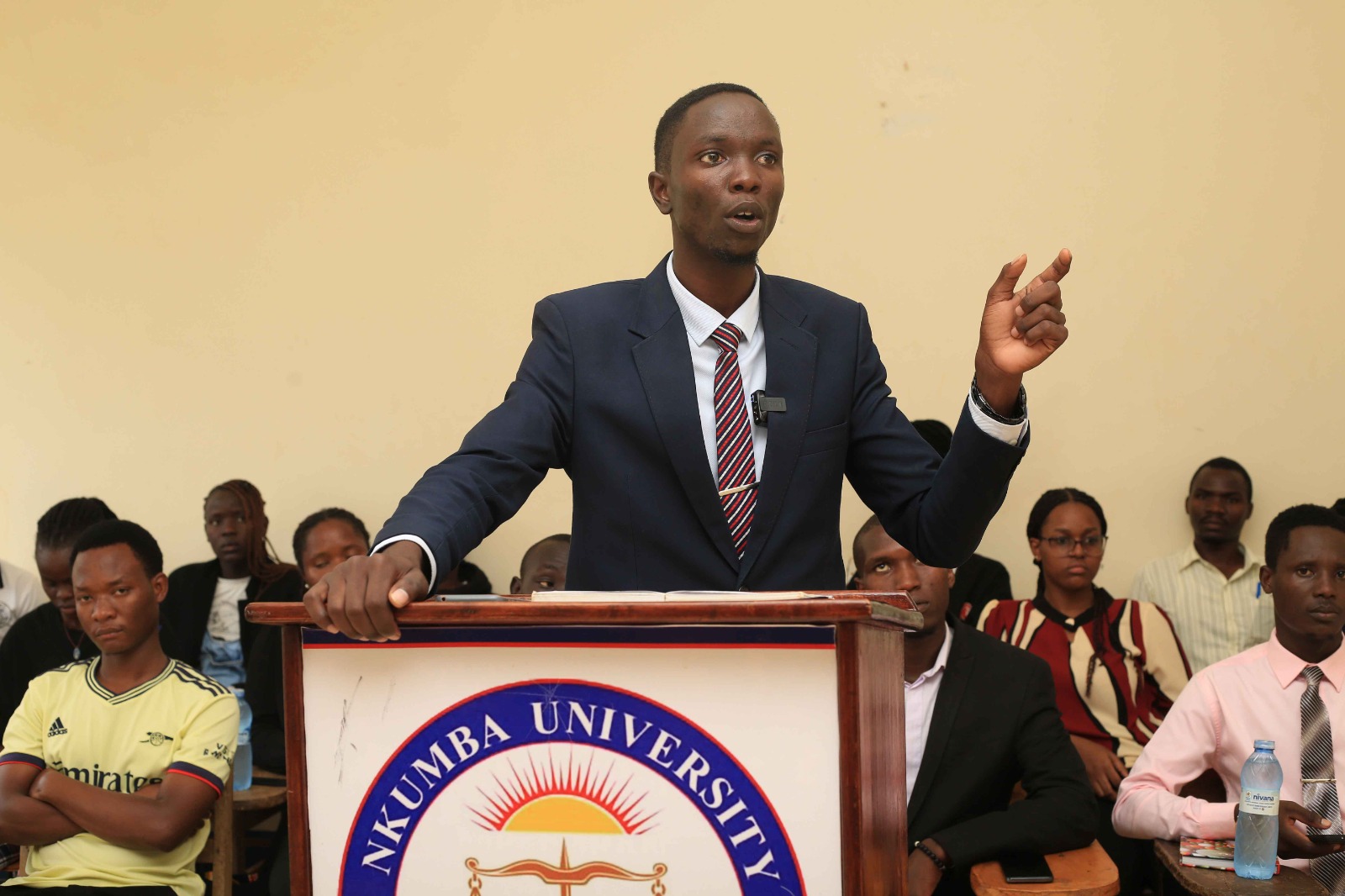
Kamara Edwin has been elected president of the Nkumba University Law Society (NULS) after securing a decisive victory in an election marked by a lower-than-expected voter turnout, according to results announced by the electoral committee on Tuesday.
Kamara garnered 132 votes out of the 288 ballots cast, comfortably defeating his closest rival Bbosa Lumu, who polled 88 votes, while Ndiwalana Mike finished third with 67 votes.

In his victory speech, Kamara pledged to promote student unity and strengthen academic engagement within the law fraternity. “This victory is not mine alone but for all law students who believe in progress, teamwork, and academic excellence,” Kamara said. “My leadership will focus on improving student representation, promoting legal research, and ensuring that every law student’s voice is heard.”
Election officials revealed that although approximately 500 students were expected to participate, only 288 managed to vote. According to the NULS Electoral Commission, access restrictions played a significant role in the reduced turnout. “Some students were unable to access the voting area due to university policy requiring at least 60 percent tuition payment to access certain facilities,” an election official explained. “This affected participation despite the high level of interest we had observed during the campaigns.”
Students who spoke to Nkumba University News expressed mixed reactions about the outcome, with some welcoming the new leadership while others raised concerns about inclusivity in the electoral process. “We congratulate the winner, but the university should find ways to allow all students to participate in such important processes regardless of their financial status.” A student who missed out on elections lamented.
The NU Law Society, one of the most active academic associations at the university, plays a central role in organizing moot court competitions, public lectures, legal aid outreach programs, and mentorship activities for aspiring lawyers.
Historically, the society has served as a training ground for student leadership and professional development, with many former leaders going on to pursue successful careers in Uganda’s legal profession. Over the years, the body has also been instrumental in promoting debate on rule of law, constitutionalism, and access to justice among students.
Political analysts within the university say Kamara’s victory reflects a growing demand among students for pragmatic leadership focused on academic support and professional exposure. “Students today are looking for leaders who can connect them to opportunities beyond the classroom,” said Fred Kasita, a former law student who is familiar with student leadership trends. “The expectations on the new president will therefore be quite high.”
Kamara is expected to assume office next week, with his first task being the appointment of a new cabinet to help implement his campaign agenda.
As the new leadership takes charge, attention will likely turn to how the Law Society plans to address student concerns about participation, welfare, and academic advancement in the coming academic year.
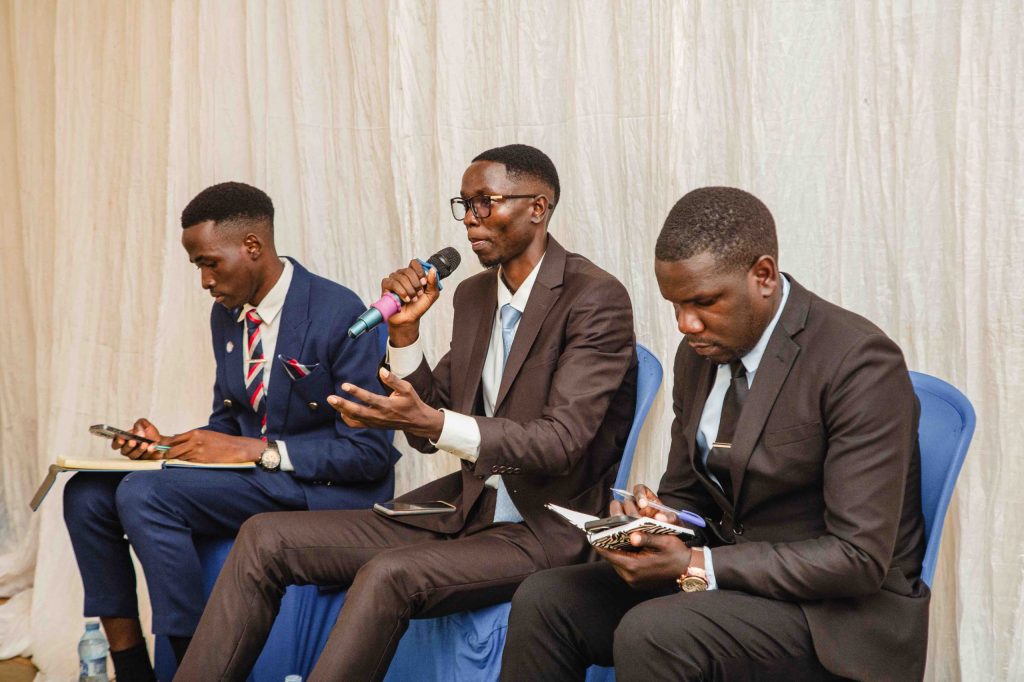
L-R: Bbosa, Kamara, and Ndiwalana, during the Presidential Debate on Tuesday.

