


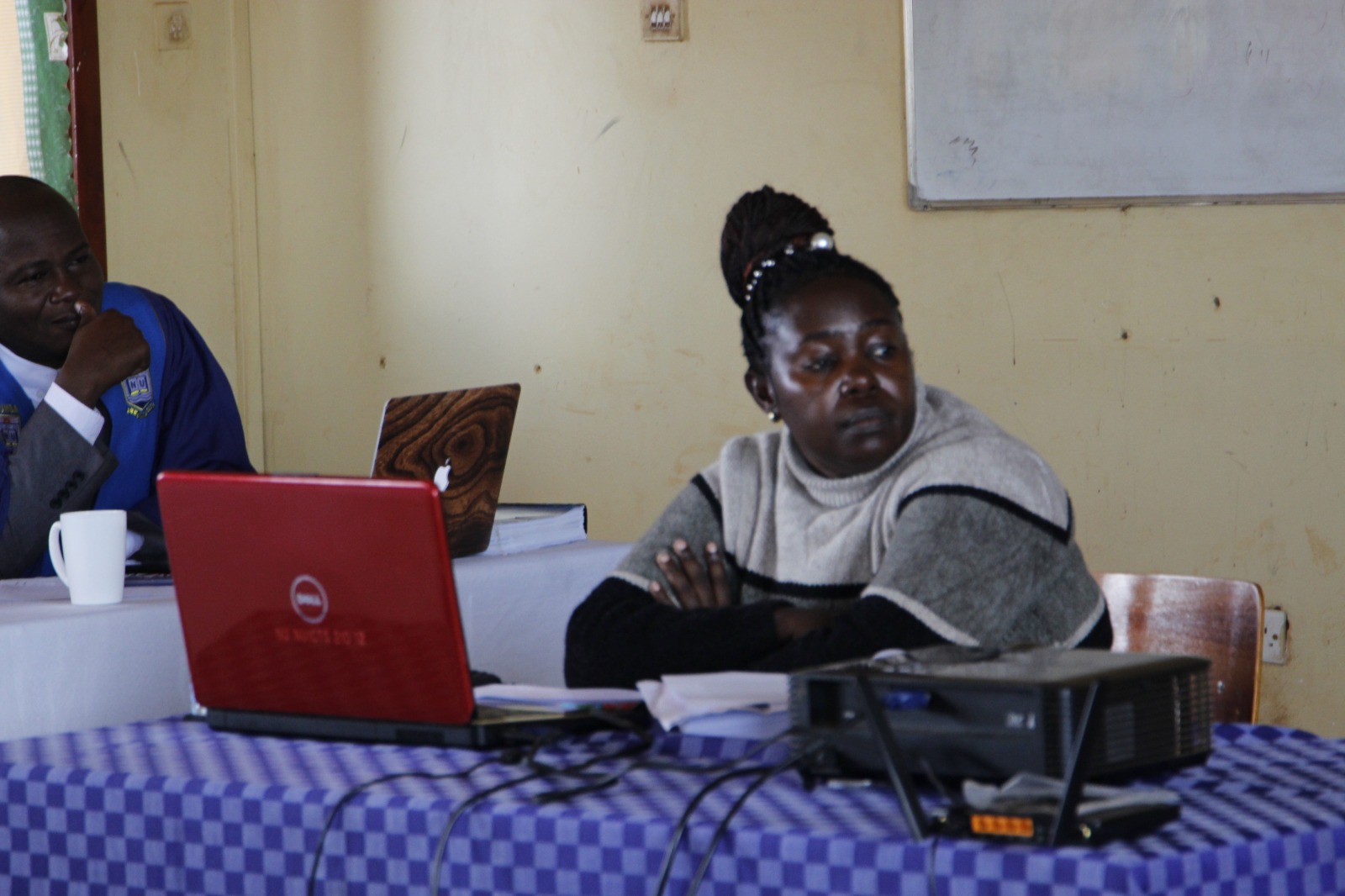
Entebbe’s premier higher institution of learning, Nkumba University yesterday unveiled Khadija Namara, a Ph.D candidate for an oral research defense academically referred to as Viva Voce.
Namara whose research centered on information technology (IT), sought to unveil the relationship between IT and employee performance under the research topic “Information Alignment and Employee Performance in the Private Sector in Uganda: A Case Study of Umeme (U) Limited, Central Uganda.”





Expert scholars who constituted the vetting panel hailed from fields related to information technology and business management including Professor Jude Lubega, an IT guru and the seating Vice Chancellor of Nkumba University to assess the depth, significance, and originality of the candidate’s research findings as well as the ability to defend her findings.

Namara’s research explored the critical issue of information technology alignment and its impact on employee performance within the private sector in Uganda, dwelling on Umeme (U) Limited as a case study.
Umeme (U) Limited, an electricity distribution company, offered a unique context for examining the relationship between IT alignment and employee performance.
The study delved into the various dimensions of IT alignment, including strategic, structural, social, and cultural alignment.

Dr. Khadija utilized a comprehensive research methodology, incorporating both qualitative and quantitative approaches.
Through surveys, interviews, and data analysis, Namara collected valuable insights from employees and management at Umeme (U) Limited. The study also involved an in-depth review of existing literature and a comparative analysis with similar organizations to provide a robust foundation for the research findings.
“ I used both quantitative and qualitative, multi-progression analysis, and descriptive statistics to overcome the challenges”, said Dr. Namara.
During the viva voce, the Ph.D. candidate demonstrated exceptional expertise and command over the subject matter, effectively defending her research, methodology, and conclusions.